Protegrity-PII explained: a 278M open PII detector, on paper
Protegrity-PII is an open-weights XLM-RoBERTa model that tags 69 PII types in 7 languages. Specs, the vendor-reported scores, and where the claims stop.
LLMTest Blog4 min read
20 stories
Protegrity-PII is an open-weights XLM-RoBERTa model that tags 69 PII types in 7 languages. Specs, the vendor-reported scores, and where the claims stop.
TL;DR: AI output PII blocking inspects responses at runtime, before they reach the destinations the control covers, and then allows, masks, replaces, or blocks each value according to policy.
I wanted to share a new open-weights PII detection model, benchmark and research paper. It's a fine-tune of RoBERTa using 1.2B samples of synthetically generated text that contain a variety of PII.
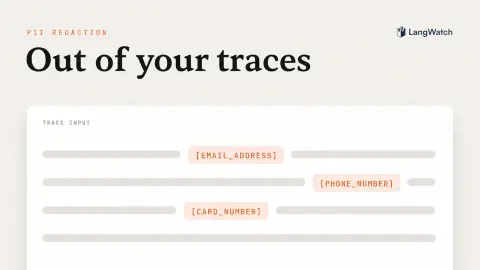
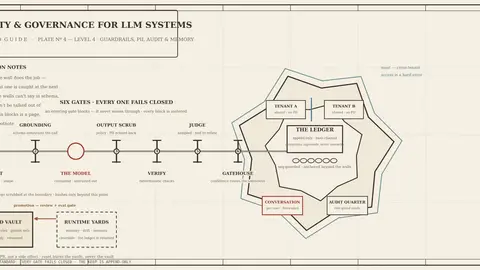
PII redaction for LLM apps: mask personal data in traces at ingestion, restrict or drop content per team, block it at the gateway, or keep it in your cloud.
TL;DR Your discharge-summary agent is live. A nurse pastes in a note: “Pt in 412, MRN 0048291, daughter Priya called re: d/c on 3/14, cb...
Training contextual masking systems for personally identifiable information (PII) requires examples distinguishing maskable from preservable mentions of one entity type, but privacy restrictions limit access to real data.
We present Protegrity-PII, a new PII decision model for structured and unstructured text. Protegrity-PII achieves a typed recall of 0.915 with a precision of 0.907 on a new benchmark we propose, PII-SCOPE.
The first few hours of an AI PII incident decide most of how it ends. The damage may already be done by then, but that is when the two things a regulator will later ask about get set: whether the exposure was stopped promptly, and whether the team can prove what happened.
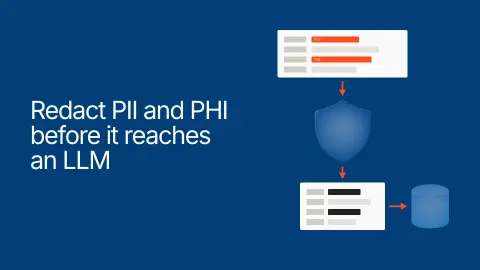
TL;DR: AI data privacy for enterprise AI depends on runtime controls that inspect prompts and responses at the moment of the call, inside your own boundary, and then allow, mask, replace, or block the content before it reaches an external AI API or a user.
Personally Identifiable Information (PII) detection models must efficiently find identifiers across diverse contexts while maintaining a low false-positive rate (FPR) on high-volume traffic.
How to Protect a Customer-Support Assistant Like Cdiscount from PII Exfiltration TL;DR: Imagine you build the customer-support assistant for a service like Cdiscount. It uses an LLM to answer tickets, query order databases, and send emails. The risk: PII exfiltration through the support tool.
A support agent pulls a customer’s last three tickets so the model can draft a reply. Ticket two holds a card number the customer typed...
Build a loop where Rampart redacts personal details on your machine, Tabstack researches the redacted question, and your own model writes the reply. Four short Python files.
Article URL: https://ndstudio.gov/posts/say-hello-to-rampart Comments URL: https://news.ycombinator.com/item?id=50024242 Points: 9 # Comments: 1
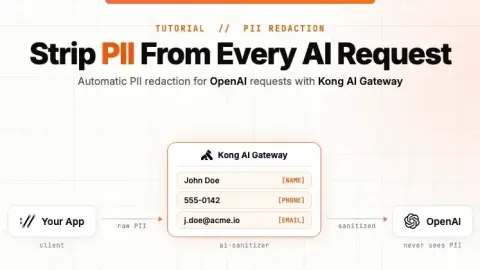
One-line summary: By the end of this tutorial, you'll have Kong AI Gateway 2.0 automatically stripping PII from every LLM request using the ai-sanitizer policy. Names, emails and phone numbers get swapped for synthetic values, and your application code doesn't change.
Founded in 2008, Stack Overflow’s public platform is used by nearly everyone who codes to learn, share their knowledge, collaborate, and build their careers.
Most conversations about protecting sensitive data in AI systems start with the prompt: what a user typed, what got pasted in, what a retrieval step pulled into context. That's the front door, and it matters. But a completely clean prompt doesn't guarantee a clean response.
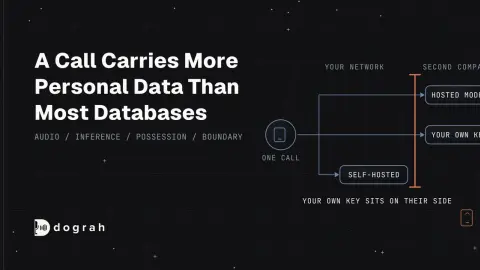
A phone call is ordinary personal data and a biometric identifier at the same time. What Illinois, the EDPB and the 2026 voiceprint filings mean for where your inference runs.
Showing 18 of 20 stories
Load more storiesGet the top AI news and tools straight to your inbox every week.
Weekly · AI news
Join 15,000+ AI enthusiasts