

How to Fine-Tune a FLUX Model in under an hour with AI Toolkit and a DigitalOcean H100 GPU
in this tutorial, we show the step by step process for fine-tuning a FLUX.1 model on an NVIDIA GPU on the cloud.
Paperspace Blog11 min read
194 stories
in this tutorial, we show the step by step process for fine-tuning a FLUX.1 model on an NVIDIA GPU on the cloud.

In this article discover Quanto a powerful quantization technique designed to optimize deep learning models without compromising the performance of the model.
In this tutorial, we discuss CODEGEN, one of the hottest Language Modeling projects tackling code generation.
In this article, we will explore SAM 2, which expands the capabilities of the original SAM to handle both images and videos. It excels in real-time object segmentation, enabling dynamic interaction through prompts and memory attention.
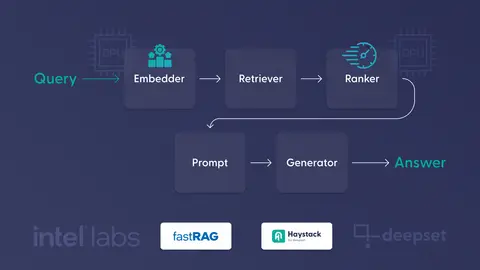
One of the main and critical components of a retrieval augmented generation (RAG) pipeline is the embedding process, which forms the foundation for efficient information retrieval by transforming raw text into machine-readable vector representations.

In this article, we will delve into the mechanics of monocular depth estimation, exploring the neural network architectures used, the techniques for training and improving these models, and the practical applications of this exciting field.

We are thrilled to introduce {keras3}, the next version of the Keras R package. {keras3} is a ground-up rebuild of {keras}, maintaining the beloved features of the original while refining and simplifying the API based on valuable insights gathered over the past few years.

Machine learning (ML) practitioners looking to reuse existing datasets to train an ML model often spend a lot of time understanding the data, making sense of its organization, or figuring out what subset to use as features.
The Mamba model, introduced in the paper Mamba: Linear-Time Sequence Modeling with Selective State Spaces by Albert Gu and Tri Dao, represents a significant advancement in sequence modeling.
Hugging Face rapidly became a very popular platform to build, share and collaborate on deep learning applications. We have worked on integrating the torch for R ecosystem with Hugging Face tools, allowing users to load and execute language models from their platform.
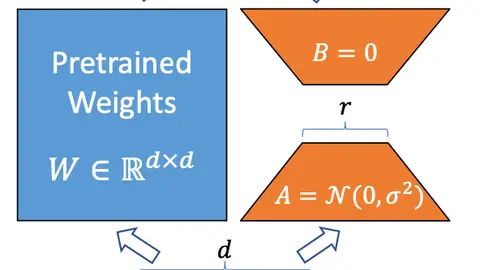
LoRA (Low Rank Adaptation) is a new technique for fine-tuning deep learning models that works by reducing the number of trainable parameters and enables efficient task switching. In this blog post we will talk about the key ideas behind LoRA in a very minimal torch example.

Implementing a language model from scratch is, arguably, the best way to develop an accurate idea of how its engine works. Here, we use torch to code GPT-2, the immediate successor to the original GPT.

Announcing safetensors, a new R package allowing for reading and writing files in the safetensors format.

torch v0.11.0 is now on CRAN. This release features much-enhanced support for executing JIT operations. We also amended loading of model parameters, and added a few quality-of-life improvements, like support for temporarily modifying the default torch device, support for specifying data types as…

Implementation and walk-through of LLaMA, a Large Language Model, in R, with TensorFlow and Keras.

Escnn, built on PyTorch, is a library that, in the spirit of Geometric Deep Learning, provides a high-level interface to designing and training group-equivariant neural networks. This post introduces important mathematical concepts, the library's key actors, and essential library use.

luz v0.4.0 is now on CRAN. This release adds support for training models on ARM Mac GPUs, reduces the overhead of using luz, and makes it easier to checkpoint and resume failed runs.

torch v0.10.0 is now on CRAN. This version upgraded the underlying LibTorch to 1.13.1, and added support for Automatic Mixed Precision. As an experimental feature, we now also support pre-built binaries, so you can install torch without having to deal with the CUDA installation.
Showing 180 of 194 stories
Load more storiesGet the top AI news and tools straight to your inbox every week.
Weekly · AI news
Join 15,000+ AI enthusiasts