

How to Run a Weekly Paper Club (and Build a Learning Community)
Benefits of running a weekly paper club, how to start one, and how to read and facilitate papers.
Eugene Yan6 min read
529 stories
Benefits of running a weekly paper club, how to start one, and how to read and facilitate papers.
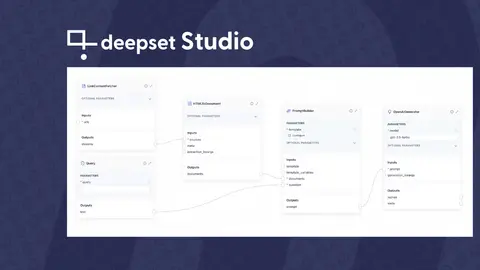
We’re thrilled to announce an exciting new addition to the Haystack ecosystem: deepset Studio! After countless requests from our community for a visual editor to create AI workflows and invaluable feedback during the beta phase, we’re officially launching deepset Studio, a powerful tool for…

In artificial intelligence, multimodal agents are becoming increasingly popular for their ability to understand and integrate multiple types of input, such as text and images.
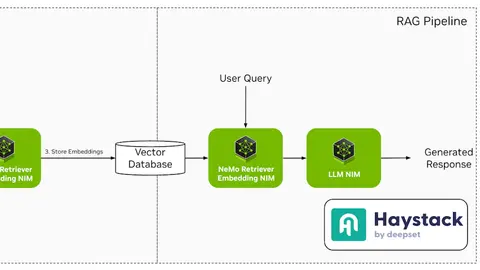
In our previous article, we explored how to build and deploy two key AI pipelines in a retrieval-augmented generation (RAG) application using Haystack with NVIDIA NIM: Indexing pipeline: Prepares data by preprocessing, chunking, and embedding PDF files, finally storing them in a vector database.
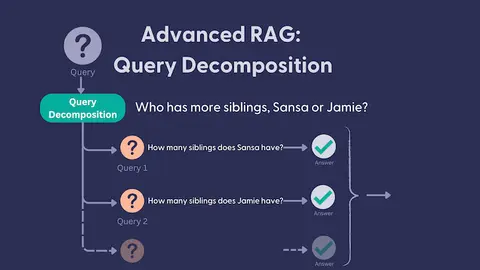
This is part one of the Advanced Use Cases series: 1️⃣ Extract Metadata from Queries to Improve Retrieval 2️⃣ Query Expansion 3️⃣ Query Decomposition 4️⃣ Automated Metadata Enrichment Sometimes a single question is multiple questions in disguise.
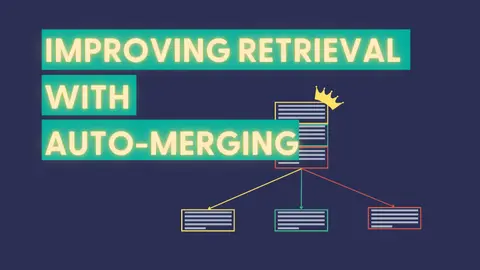
For most RAG applications, where we first have to retrieve the most relevant context, we end up having to split up documents first, and index those smaller splits of documents.
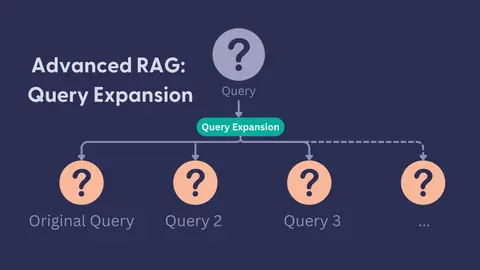
This is part one of the Advanced Use Cases series: 1️⃣ Extract Metadata from Queries to Improve Retrieval 2️⃣ Query Expansion 3️⃣ Query Decomposition 4️⃣ Automated Metadata Enrichment The quality of RAG (retrieval augmented generation) highly depends on the quality of the first step in the process:…
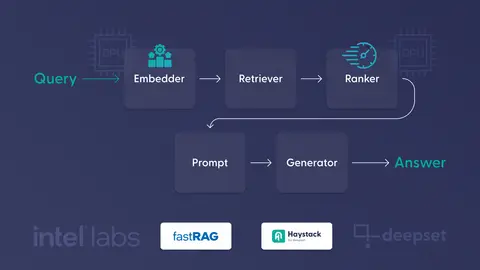
One of the main and critical components of a retrieval augmented generation (RAG) pipeline is the embedding process, which forms the foundation for efficient information retrieval by transforming raw text into machine-readable vector representations.
It’s 2024 and yet, most models today are still primarily geared towards English speaking markets. Today, deepset and Mixedbread are jointly announcing our latest contribution towards changing that landscape: A new open-source German/English embedding model - deepset-mxbai-embed-de-large-v1.
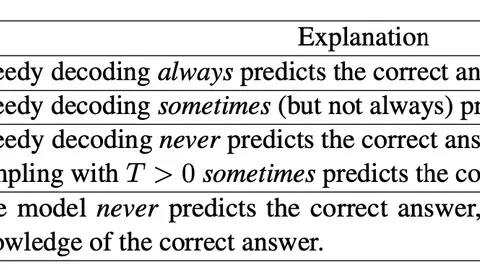
Hallucination in large language models usually refers to the model generating unfaithful, fabricated, inconsistent, or nonsensical content. As a term, hallucination has been somewhat generalized to cases when the model makes mistakes.

What to interview for, how to structure the phone screen, interview loop, and debrief, and a few tips.
In this article, we will show you how to use Haystack to evaluate the performance of a RAG pipeline. Note that the code in this article is meant to be illustrative and may not run as is; if you want to run the code, please refer to the python script.

When building real-world applications based on Language Models (such as RAG), evaluation plays an important role. Recently, evaluating generated answers using powerful proprietary Language Models (such as GPT-4) has become popular and correlates well with human judgment, but it comes with its own…
Retrieval-augmented generation (RAG) systems combine generative AI with information retrieval for contextualized answer generation. Building reliable and performant RAG applications at scale is challenging.
Getting your LLM application into production is a huge milestone, but that’s only the beginning. It’s critical to monitor how your pipeline is performing in the real world so you can keep improving performance and cost, and proactively address any issues that might arise.

This is part one of the Advanced Use Cases series: 1️⃣ Extract Metadata from Queries to Improve Retrieval 2️⃣ Query Expansion 3️⃣ Query Decomposition 4️⃣ Automated Metadata Enrichment In Retrieval-Augmented Generation (RAG) applications, the retrieval step, which provides relevant context to your…
This post is an update on what I’ve been up to since I joined Cohere. I’ve had fun contributing to the launch of Command R and R+, the latest Cohere models. I’ll discuss more details once the tech report is out; in the meantime I’ll share what I’m most excited about.

Is Attention all you need? Mamba, a novel AI model based on State Space Models (SSMs), emerges as a formidable alternative to the widely used Transformer models, addressing their inefficiency in processing long sequences.
Showing 522 of 529 stories
Load more storiesGet the top AI news and tools straight to your inbox every week.
Weekly · AI news
Join 15,000+ AI enthusiasts