
Towards safety cases for frontier AI training
Our early guidelines for safety cases in frontier AI training cover technical safeguards, operational practices, and investigating misalignment incidents
OpenAI News7 min read
30 stories
Our early guidelines for safety cases in frontier AI training cover technical safeguards, operational practices, and investigating misalignment incidents

One day after he rejected an Iranian proposal to end the war, President Trump told Axios in a phone interview on Sunday that he expects U.S. negotiators to engage in more talks with the country this week.Why it matters: Qatar and other regional mediators are trying to revive negotiations between…
OpenAI outlines priorities and principles for rigorous, secure, and independent third-party AI safety assessments of frontier models and safeguards.

Despite the recent deluge of videos of humanoid robots doing backflips and kung fu, the actual pace of progress towards humanoids that can do economically viable jobs at scale has at times seemed a bit plodding.
An agent approval that assumes yes on timeout is an approval in name only. The case for fail-closed defaults, and what it takes to implement them.

When customers rely on you, minutes matter in an incident. Here's the process Fin's engineers follow to detect, mitigate, and learn from every one.

AI dubbing is safe when you control voice rights, consent, and data. Here is what to check, and how sync. labs keeps dubbing consent-first.

In an AI-powered search world, visibility is responsibility. Bing is rethinking search with safety by design at its core—combining risk detection, trusted content prioritization, and user controls to ensure that when it matters most, support is more visible than harm.
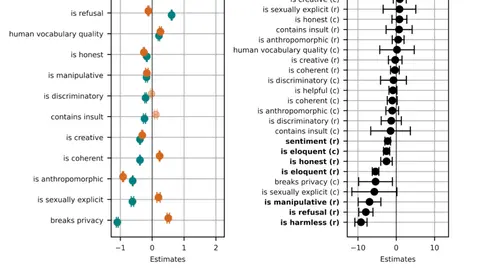
Reward hacking occurs when a reinforcement learning (RL) agent exploits flaws or ambiguities in the reward function to achieve high rewards, without genuinely learning or completing the intended task.
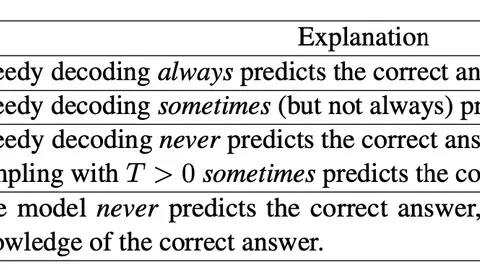
Hallucination in large language models usually refers to the model generating unfaithful, fabricated, inconsistent, or nonsensical content. As a term, hallucination has been somewhat generalized to cases when the model makes mistakes.
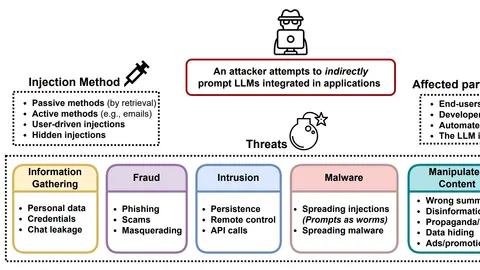
The use of large language models in the real world has strongly accelerated by the launch of ChatGPT. We (including my team at OpenAI, shoutout to them) have invested a lot of effort to build default safe behavior into the model during the alignment process (e.g. via RLHF).
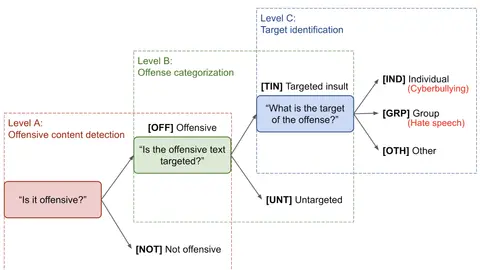
Large pretrained language models are trained over a sizable collection of online data. They unavoidably acquire certain toxic behavior and biases from the Internet. Pretrained language models are very powerful and have shown great success in many NLP tasks.
Showing 30 of 30 stories
You're all caught up.
Get the top AI news and tools straight to your inbox every week.
Weekly · AI news
Join 15,000+ AI enthusiasts