What Is Spec-Driven Development? Tools and Evidence (2026)
Spec-driven development means you write what the software must do before an AI agent builds it. The loop, the tools, the evidence and a no-code version.
Taskade Blog38 min read
37 stories
Spec-driven development means you write what the software must do before an AI agent builds it. The loop, the tools, the evidence and a no-code version.
Kiro’s new credit pooling model gives enterprise engineering teams shared credits, granular governance, and usage flexibility for predictable AI spend.
We built an automated way for Kiro to model parts of its own code in Lean, prove theorems about those models, and check each model against TypeScript / Rust / Python code. We ran it first on Kiro itself. We analyzed 96 candidate properties and observations across models of 26 functions.
Spec-driven development (SDD) is changing how large teams build software. Instead of relying on a prompt alone, you author a specification that guides an AI coding agent through design, tasks, and implementation; a flow we abbreviate here as Specify → Plan → Execute.
We are expanding Kiro for Students to 41 more universities worldwide. Students at every eligible school get one free year of Kiro. This includes 1,000 credits each month and paid features like premium models. See the full list of eligible universities.
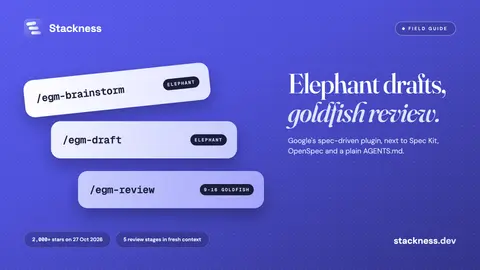
Google's Elephant Goldfish model drafts a spec in one long agent session, then has fresh-context subagents review it. v0.1.0 shipped on 27 October 2026.
Starting on November 1, we're changing how the Kiro free trial works. If you upgrade to Pro for the first time, the rest of that month is on us. You also get 500 trial credits that you can use any time in the next 12 months.
Claude Haiku 5.5 is available today across Kiro IDE, CLI, Web, and Crew. It is the fastest model in the Claude 5.5 family, aimed at work that runs in large volumes and needs a quick response, and it is a clear step up from Claude Haiku 4.5.
In our last post, we described how three engineers and a crew of agents merged 1,000 pull requests in one week. The most common question we got back was how we keep that from breaking everything. But we think there’s a better question to ask.
Today, we’re introducing memory in Kiro IDE and CLI. Kiro can remember how you prefer to work, repository-specific commands and conventions, corrections, debugging insights, and approaches you have already ruled out.
One sentence in Kiro’s file-read and search tool descriptions made a false claim about how the harness behaves, and it reached the model 61,742 times across a few hundred sessions. It did nothing useful, and it’s unlikely anyone would have filed a ticket for it.
Today, we are excited to announce that Kimi K3 model from Moonshot AI is available in Kiro, bringing the world’s first open-weight 2.8T-parameter model (according to Moonshot AI) directly into your agentic development workflow.
Kiro local sandboxing helps protect your local files and credentials by limiting what agent-run commands and scripts can access. The operating system enforces these limits, reducing the impact of a mistaken command or untrusted script. It is generally available now in Kiro IDE and Kiro CLI.
It’s context load, not fresh eyes. A workflow you can set up in Claude Code today, and a small kata where a tautological test was…Continue reading on Towards AI »
Until now, there was no way to control how enterprise users sign in to Kiro on managed devices. Even if your organization requires IAM Identity Center, users can still sign in to Kiro with a personal account (Google, GitHub, or Builder ID).
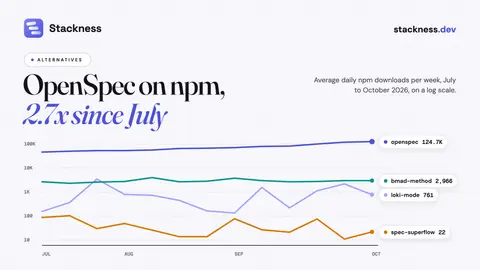
OpenSpec is the pick for most: MIT, 38 agents, half Spec Kit's tokens in one test. Eight spec-driven tools, and what each adds over a plain AGENTS.md.
Kiro CLI V3 brings the same agent harness that powers Kiro IDE and Kiro Web to your terminal. With V3, you can give Kiro a task that needs planning, implementation, and review, and keep working while workflow agents handle the steps in the background.
Claude Sonnet 5.5 is available today across Kiro IDE, CLI, Crew, and Web. It is Anthropic’s fastest Sonnet model to date and a clear upgrade over Claude Sonnet 5. In our internal benchmarking, Sonnet 5.5 performed better than Sonnet 5, while being more efficient in both token usage and speed.
Showing 18 of 37 stories
Load more storiesGet the top AI news and tools straight to your inbox every week.
Weekly · AI news
Join 15,000+ AI enthusiasts