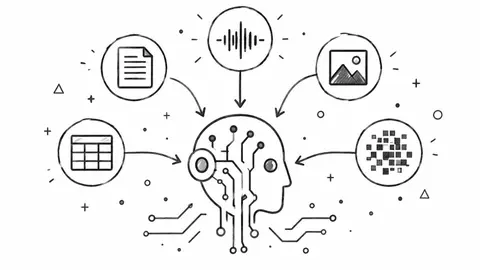
Why Synthetic Data Helps Document Processing and OCR Models
OCR models need realistic text layout and edge cases. Synthetic data offers a scalable way to generate them without the cost or privacy risks of real documents.
Coasty Blog3 min read
18 stories
OCR models need realistic text layout and edge cases. Synthetic data offers a scalable way to generate them without the cost or privacy risks of real documents.
Real agents need real benchmarks. Learn how synthetic data helps you evaluate computer use AI with scalable, controllable tests that mirror real desktop environments.
A plain-English guide to AI training data — what it is, where it comes from, how it is cleaned and labeled, and how makers and small teams can build better
Real automation tests are brittle. Synthetic data fills the gaps, lets you test edge cases safely, and scales coverage without breaking production. Here is how it works and why it matters.
Real-world data is messy, risky, and expensive. Synthetic data offers a clean, privacy-safe alternative, but only when built correctly. Here is what you need to know to use it responsibly.
Real test environments are fragile and expensive. Synthetic data gives teams repeatable, safe test cases at scale, without touching production. Learn why synthetic data matters and how Coasty can help.
Real-world data is expensive and risky. Synthetic data gives you high-quality training and evaluation without exposing sensitive information. Here’s what you need to know and how to get started.
Training AI on real health or personal data is risky and expensive. Synthetic datasets that respect privacy laws can solve both problems without sacrificing realism.
Fine-tuning LLM agents needs more than just text. Synthetic data helps you build robust, multi-turn interaction datasets without the cost or risk of real user data.
Training AI on rare failures is hard when they never happen in production. Synthetic data lets you flood the model with edge cases to make it robust.
Real documents are messy, hard to label, and expensive to acquire. Synthetic data can solve these bottlenecks with realistic variations and zero privacy risk.
Real user sessions are scarce and expensive. Synthetic data lets teams stress-test agents at scale without privacy risks or bias.
Self-improving agents need fresh, labeled data. Synthetic data lets teams scale evaluation and training loops faster than real data alone.
Real datasets miss the rare stuff that breaks your model. Synthetic data fills the gaps, lets you test safely, and cuts labeling cost. Here is how.
Real interaction data is scarce, expensive, and risky. Synthetic trajectories from realistic browsing and desktop sessions give you scale, safety, and performance without the downsides. Learn the tradeoffs and what to watch out for.
Most teams hit a wall: too few labeled examples or data that exposes sensitive info. Synthetic data offers a practical path forward, and here’s what you actually need to know.
Real desktop interaction data is hard to get. Computer use agents can capture it at scale and turn it into synthetic datasets for training and evaluating AI. Learn the tradeoffs and how to start.
My AI detectors flagged many genuine reviews, and filtering them made the sentiment model less accurate. The post AI Slop Is Already in Your Training Dataset. I Tested Three Ways to Spot It. appeared first on Towards Data Science.
Showing 18 of 18 stories
You're all caught up.
Get the top AI news and tools straight to your inbox every week.
Weekly · AI news
Join 15,000+ AI enthusiasts