AI agents in production: What changes when real users arrive
AI agents in production drift once real users arrive, even after passing pre-launch checks. Learn how to catch agent drift and roll back bad behavior fast.
Launch Darkly19 min read
105 stories
AI agents in production drift once real users arrive, even after passing pre-launch checks. Learn how to catch agent drift and roll back bad behavior fast.
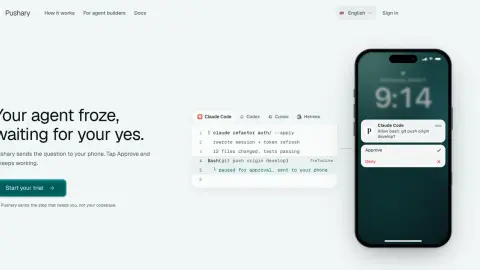
Public data on how long AI agents wait for a person: what Copilot and Anthropic telemetry show, why agents stop, and what the 23 minute figure measures.
OpenRouter alternatives add a credit fee, plan or infrastructure work. Compare OpenRouter pricing and gateway costs at $100, $1,000 and $10,000 in model spend.
An agent can pass its offline eval and still break in production. Evals from code helps close that gap by running your dataset through the same code, tools, and config your agent ships with.
Your code just got a second pair of eyes. v0's new Security Review hunts for missing auth checks, injection, and SSRF, then tells you how bad it is. Nothing changes unless you say so. Just ask. Curious what it finds?
AI agent observability goes beyond monitoring dashboards. Learn how to trace silent agent failures, roll back a bad variation, and verify recovery.
Appwrite Sites and Functions now stream their responses, so server-rendered pages show up in parts as they render and AI output reaches your users while the model is still writing.
A practical comparison of the Python agent harnesses you can build on: which models each runs, where its agent works, how much of it you can take apart, how runs survive a restart, and when each one is the right pick.
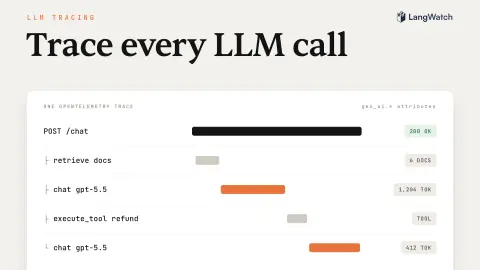
Set up LLM tracing with OpenTelemetry: trace an agent with gen_ai.* attributes, send it to LangWatch over OTLP, fan it out with a collector, then search and evaluate it.
Synap scores 95.6% on LongMemEval, ahead of every published score from the major agent memory platforms, and today the architecture behind it is open source as Synap Core.
I built the same notification system on Novu, Knock, and Courier, then tested escalation, AI steps, and agent replies. Here's what worked, what didn't, and what it cost.
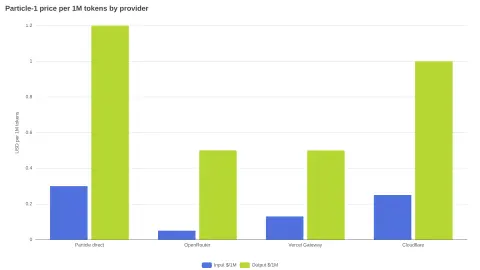
Particle-1 API pricing compared across providers: $0.05-$0.30 input. Independent 40/43 test shows when token savings beat DeepSeek.
What an AI software factory is, where it came from, how the 2026 loop works, how to measure it, and how a team that does not code runs its own app factory.
Anyone can build software. Who keeps it running? The new advantage is how fast a business turns a real operational problem into a working, verified change.
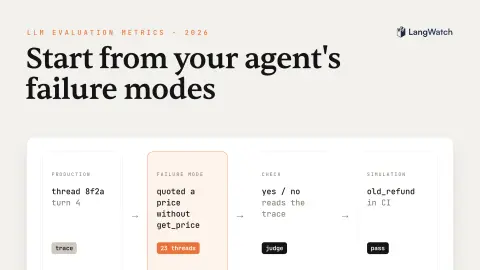
LLM evaluation metrics that matter in 2026: failure modes from production, yes or no checks that read the trace, agent simulations, experiments, and harness metrics.
Vercel Labs has released fx, an experimental open-source coding agent written in Zig. It runs as a CLI, a script component, or an embedded library, including a WebAssembly build. Early feedback questioned its model-agnostic claim and a name conflict with an existing tool.
Most coding agents want your credit card before you have typed a single prompt. OpenCode is the opposite. It is MIT licensed, it has crossed 213,000 stars on GitHub, and version 2.0 landed in October 2026 with a real rebuild under it: a shared background service, background subagents that run in…
I got tired of coding agents telling me the frontend work was done when nobody had opened the frontend. You've probably seen the routine. The agent changes some code, runs the formatter, the type chec
Showing 18 of 105 stories
Load more storiesGet the top AI news and tools straight to your inbox every week.
Weekly · AI news
Join 15,000+ AI enthusiasts