
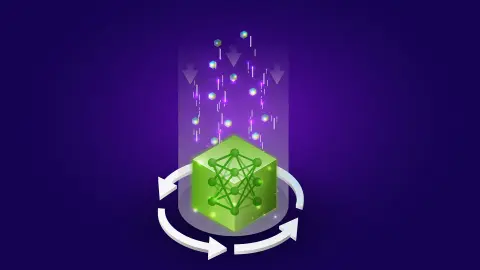
Start and Restore GPU Workloads in Seconds with NVIDIA Snapshot
NVIDIA Snapshot, a new open-source component of the NVIDIA DSX AI Factory Platform, makes initialized GPU workloads reusable across inference...
NVIDIA Developer Blog10 min read
543 stories
NVIDIA Snapshot, a new open-source component of the NVIDIA DSX AI Factory Platform, makes initialized GPU workloads reusable across inference...
November 9, 2026 — Claude Fable 5.2 and Mythos 5.2 arrive on Anthropic’s IPO roadshow day. How much thinking is worth paying for?
CoreWeave is now a Platinum member of the CNCF and Rita Zhang received a Lifetime Achievement award for a decade of work shaping the Kubernetes community.
vLLM 0.33 ships a request cap, — max-num-queued-reqs, that is off by default. In a simulated 40-call agent burst on 4 slots, a tight cap refused 33 calls and cut P95 time-to-first-token for the rest from 37 s to 2.3 s.
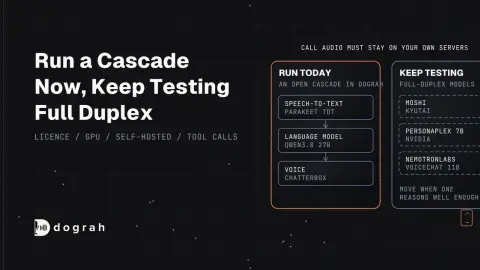
Open-source speech-to-speech models compared: Moshi, PersonaPlex, NemotronLabs VoiceChat and Qwen3-Omni by licence, size, GPU and phone readiness, and what to run on your own servers today.
⭐️ Highlights 🧭 Classify and Route with the OpenAI Decisions API Three new components use the OpenAI Decisions API to choose how to handle your data without instructions.
LoRA offers a parameter-efficient adaptation strategy, supporting multi-user workloads via customized adapters on a shared backbone. However, serving concurrent requests with different adapters introduces substantial computation and memory-management overhead.
NVIDIA Nemotron 3.5 Super VL, a 120B-parameter multimodal vision-language model, is now available in Amazon SageMaker JumpStart. Deploy the NVFP4 or BF16 variant in a few steps, then run text, image, and video inference for document intelligence, computer-use agents, and multimodal agentic…

Mixture-of-Experts (MoE) models have enabled state-of-the-art LLMs to be scaled to hundreds of billions of parameters, but they come with a fundamental and costly caveat: every expert MLP must occupy memory at inference time, even though the vast majority are idle for any given token.
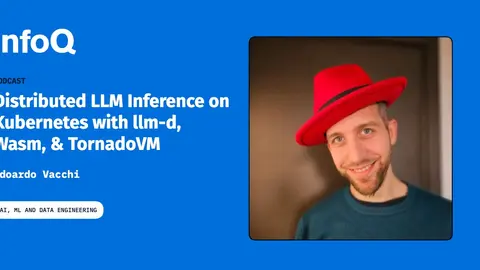
In this episode, Edoardo Vacchi discusses the evolving landscape of WebAssembly on the backend, running Java workloads on GPUs using TornadoVM, and optimizing distributed AI inference using llm-d and vLLM on Kubernetes.

Deploy Qwen3.8-Flash-Next on Runpod with vLLM's dedicated image. Validated flags, 4x H200 hardware math, measured cold starts, and the NCCL fix you need on day one.
NVIDIA A40 GPUs on Runpod pair high performance with low cost and strong availability, making them a good value for fine-tuning LLMs and machine learning.
How to get up and running with Kimi K3 without the overhead of running an entire cluster.
A quick primer on how templates function, with a focus on private versus public settings.

For anyone running an inference server: a zero-variance control, five traffic traces, and an engine-vs-scheduler split show where the gains come from. The post Continuous Batching Beats Static and Dynamic by Up to 2.91× in vLLM appeared first on Towards Data Science.

Google’s eighth-generation TPU announcement on Monday included more than new chips, introducing TPU Sync, an open-source system designed to speed The post Google claims its new AI software cuts inference latency by over 90% — but there’s a catch appeared first on The New Stack.
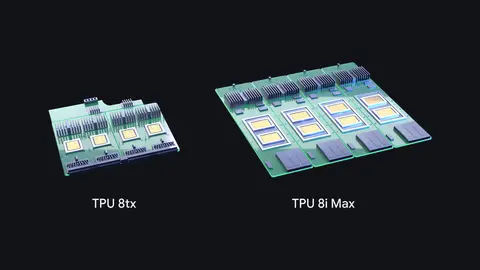
We’ve expanded our eighth generation TPU portfolio with TPU 8tx and TPU 8i Max, marking four new TPU systems in a single year.

Arete-27B is a 27B Apache 2.0 fine-tune of Qwen3.8-27B. Here's the hardware it needs locally and how its benchmarks stack up.
Showing 54 of 543 stories
Load more storiesGet the top AI news and tools straight to your inbox every week.
Weekly · AI news
Join 15,000+ AI enthusiasts