
US Army integrates electronic warfare systems for enemy signal disruption
The US Army has demonstrated how three electronic warfare and cyber technologies can work together...
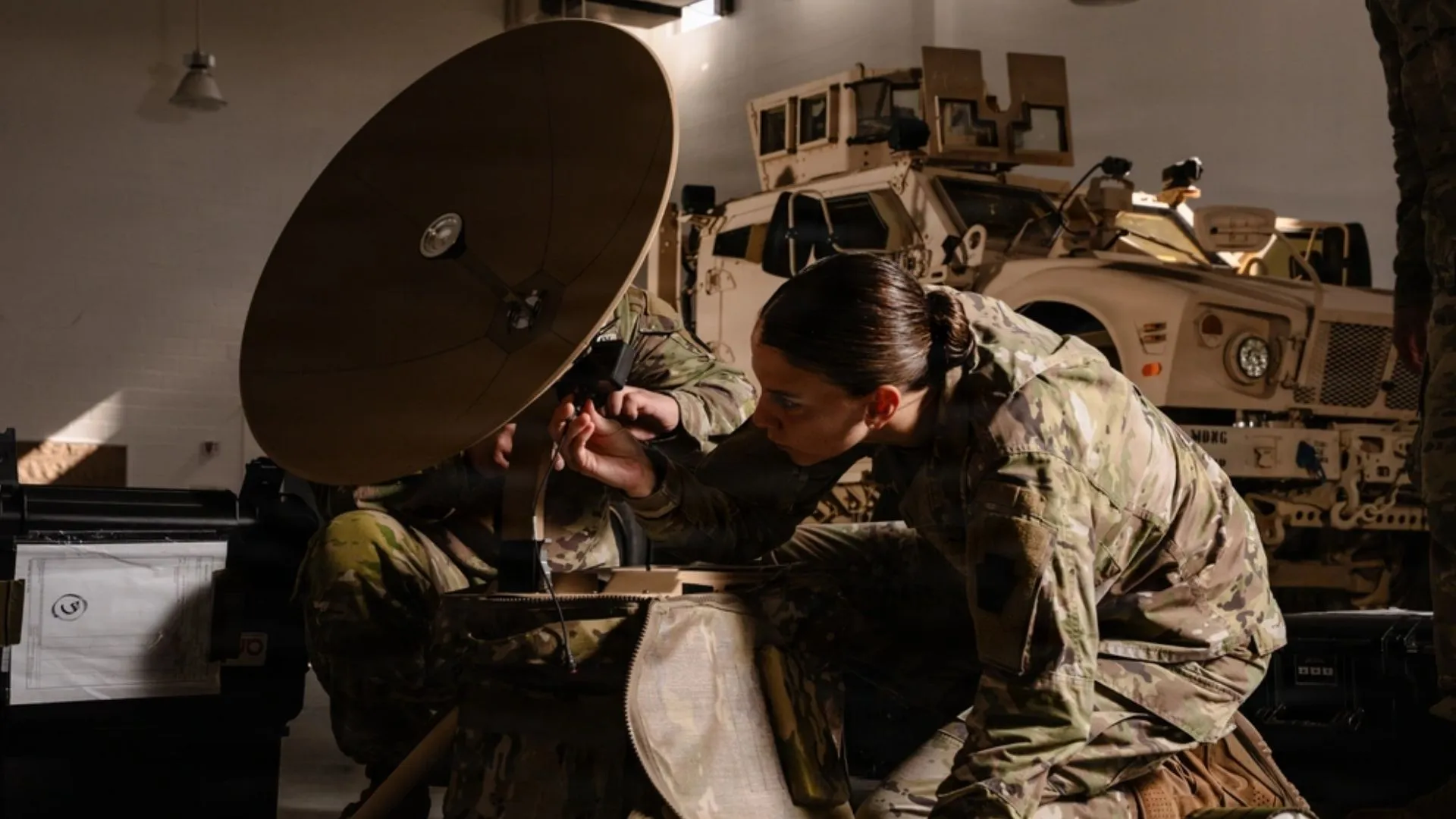
The US Army demonstrated an integrated electronic warfare system combining three technologies to detect and disrupt hostile communications using AI and software-defined radio-frequency effects.
What happened
The US Army tested an integrated electronic warfare system at Aberdeen Proving Ground, connecting TRAC (spectrum monitoring), TDK (signal analysis with AI), and Warped Alloy (protocol-level interference) to disrupt adversary communications in a simulated battlefield scenario.
Why it matters
This development could enhance military capabilities in contested electromagnetic environments by providing adaptable, software-driven solutions to counter evolving communication strategies.
- Modular systems enable faster adaptation to new threats
- AI enhances signal analysis in electronic warfare operations
- Software-defined approaches offer flexibility over traditional hardware solutions
The bigger picture
The system could reduce response times for electronic warfare operations and establish a reusable framework for non-kinetic cyber-electromagnetic effects across compatible hardware.
The demonstration highlights the Army's progress in integrating AI and software-driven technologies for electronic warfare, though further development is needed before full deployment.
Technical details
- TRAC: Ruggedized platform with CMOSS for modular integration
- TDK: AI/ML-based signal analysis using a database of known adversary signals
- Warped Alloy: Software framework for protocol-level radio-frequency effects
- Software-defined radios enabling dynamic reconfiguration of countermeasures
FAQ
What are the three systems integrated in the demonstration?
The systems are TRAC (spectrum monitoring), TDK (signal analysis with AI), and Warped Alloy (protocol-level interference).
How does AI contribute to the system?
AI/ML in TDK helps analyze unfamiliar signals, identify frequencies, and detect patterns for more effective countermeasures.
What is the significance of Warped Alloy?
Warped Alloy enables protocol-level interference rather than traditional overpowering methods, allowing more precise and adaptable communication disruption.
This summary and analysis were generated with AI from the original article and may contain errors. Read the original for the full story.
Read the full story
Originally published by Interesting Engineering - Robotics on Oct 10, 2026.
Comments
Sign in to join the discussion.