

DataRobot
Delivers AI applications and platform to maximize business impact and minimize risk.
What is DataRobot?
DataRobot is an AI Platforms tool that delivers AI applications and platform to maximize business impact and minimize risk. It is aimed at enterprise teams, data scientists and ai developers.
DataRobot provides an AI platform designed to maximize business impact while minimizing risk. It unifies complex enterprise environments and offers foundational, business, and purpose-built agents. The platform is recognized as a multiyear leader in DSML platforms and AI governance.
Built for enterprise teams, data scientists and ai developers.
Key capabilities
Features
Agent Workforce Platform
Foundational Agents
Business Agents
Purpose-Built Agents
Teams That Build Agents
Integrate SAML SSO
Two-Factor Authentication
API Keys And Tools
Inbound OAuth
Webhook Event Payloads
Use cases
- Maximize business impact through AI applications
- Minimize risk in enterprise AI deployments
- Unify complex enterprise environments with agents
- Deploy foundational, business, and purpose-built agents
Popular use cases
Who it's for
Pros & cons
Pros
- Public API available
- Integrates with Slack, GitHub, Salesforce, Snowflake, AWS, Google Cloud, Azure, OpenAI, Hugging Face, LangChain
Cons
No documented limitations yet.
AI models
- Llama 2
Developer & API
Public REST API available
- Authentication
- API Key, Oauth2
- SDKs
- Python SDK, Python
- Webhooks
- Supported
Security & compliance
- SOC 2
- ISO 27001
- HIPAA
- SSO
- SAML
- Two-factor authentication
- Encryption
- Data deletion
As stated on DataRobot's website — not independently verified by AiByts.
FAQ
What is DataRobot?
DataRobot is an AI Platforms tool that delivers AI applications and platform to maximize business impact and minimize risk. DataRobot provides an AI platform designed to maximize business impact while minimizing risk. It unifies complex enterprise environments and offers foundational, business, and purpose-built agents. The platform is recognized as a multiyear leader in DSML platforms and AI governance.
Does DataRobot have an API?
Yes, DataRobot offers a public REST API with webhooks for building custom integrations.
Who should use DataRobot?
DataRobot is built for enterprise teams, data scientists and ai developers. Common uses: maximize business impact through AI applications, minimize risk in enterprise AI deployments, unify complex enterprise environments with agents and deploy foundational, business, and purpose-built agents.
What does DataRobot integrate with?
DataRobot integrates with Slack, GitHub, Salesforce, Snowflake, AWS, Google Cloud, Azure and OpenAI, among 10 integrations.
What are the best alternatives to DataRobot?
Similar tools on AiByts include Hebbia, Weights and Biases Weave, Generrated, Together AI and Viso Now.
DataRobot news & updates
You assembled the stack. Who owns go-live?
Your team has demonstrated that the AI prototype works. The agent handles the examples well, and the people watching can see where it belongs in the business.
DataRobot Blog5 min read
The unsexy AI: why your forklift matters more than your chatbot
Your forklift breaks down at 7 a.m. Your best technician is 40 minutes away. Nobody has even checked whether the part is in the warehouse yet. By the time someone finds the manual, confirms the part, and gets a dispatcher moving, half a shift is gone and the SLA clock is still running.
DataRobot Blog6 min readYour AI factory is running. What’s it producing?
Your AI factory can be fully operational while the business processes it was funded to improve remain unchanged. The infrastructure is in place, and your models are already running inference at volume.
DataRobot Blog5 min read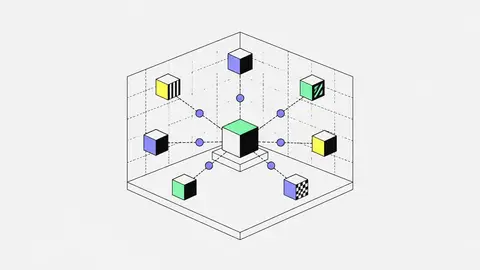
Adversarial evaluation for Agent Assist: ship agents that survive production
DataRobot Agent Assist now runs automated, multi-turn red-teaming against your agents before you deploy, then proposes fixes you approve and retests until the agent holds. The post Adversarial evaluation for Agent Assist: ship agents that survive production appeared first on DataRobot.
DataRobot Blog3 min readYou hired consultants to map your AI opportunity. Now who’s putting it into production?
Your AI roadmap is complete, yet no one clearly owns the work of turning it into a production system. Many AI initiatives stall during this handoff. The artifacts of a serious engagement are in place: mapped processes, prioritized use cases, an approved business case, and a roadmap built around…
DataRobot Blog6 min readHow much guardrail does your AI agent need? What leaders must be able to defend
When an AI agent causes harm, leaders must be able to defend why it was allowed to act. To a board, auditor, or regulator, they need to show that the agent’s permissions, controls, and approvals were matched to the consequences of failure.
DataRobot Blog9 min readAgentic AI guardrails: what enterprise leaders are accountable for
The quarterly infrastructure bill comes in at nearly four times the forecast. An AI agent has been retrying failed tasks and consuming resources within the permissions and spending limits it was given.
DataRobot Blog9 min readDo you need enterprise AI orchestration? A 3-question readiness framework
An internal payment agent used by five employees may need more orchestration than a customer-facing assistant serving 50,000 users that only drafts responses for human review. The payment agent can move money before anyone intervenes. The drafting assistant remains behind a human checkpoint.
DataRobot Blog7 min readStop managing infrastructure: A new way to deploy AI agents and models
Standing up an agent as a production service on Kubernetes means five YAML files, a few hundred lines between them, and (in most enterprises) a ticket in someone else’s queue. On the Workload API it means one spec file, one command, and about five minutes to a live URL.
DataRobot Blog8 min read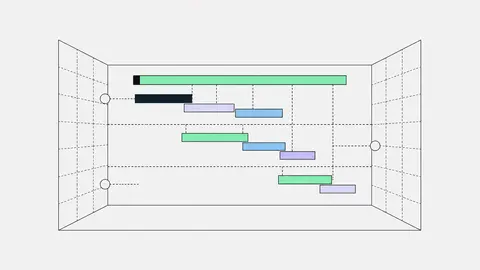
Local tracing in the DataRobot CLI: catch issues before production
DataRobot local tracing puts an OpenTelemetry dashboard on your localhost from the first line of code, so you can debug agent behavior before it ever reaches production. The post Local tracing in the DataRobot CLI: catch issues before production appeared first on DataRobot.
DataRobot Blog3 min read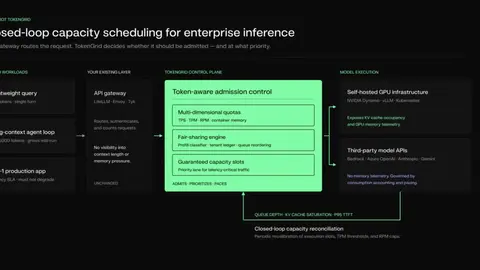
Stop Rate-Limiting Requests. Start Scheduling Tokens: Introducing DataRobot TokenGrid
Authors: Sudeeptha Jothiprakash, Venkat Bala, Tushar Pandey, Romi Datta The real bottleneck in the modern AI stack Enterprise IT has a strange problem: token spend and third-party model subscription costs keep climbing, while the GPU clusters running these workloads sit at just 20% utilization.
DataRobot Blog6 min read
Details are compiled from DataRobot's website and public sources, last verified Oct 3, 2026. Features and pricing change — confirm on the official site before you buy.
Try DataRobot
Visit the official website
Comments
Sign in to join the discussion.