

Nanonets
Automates manual processes and delivers clean data to systems of record
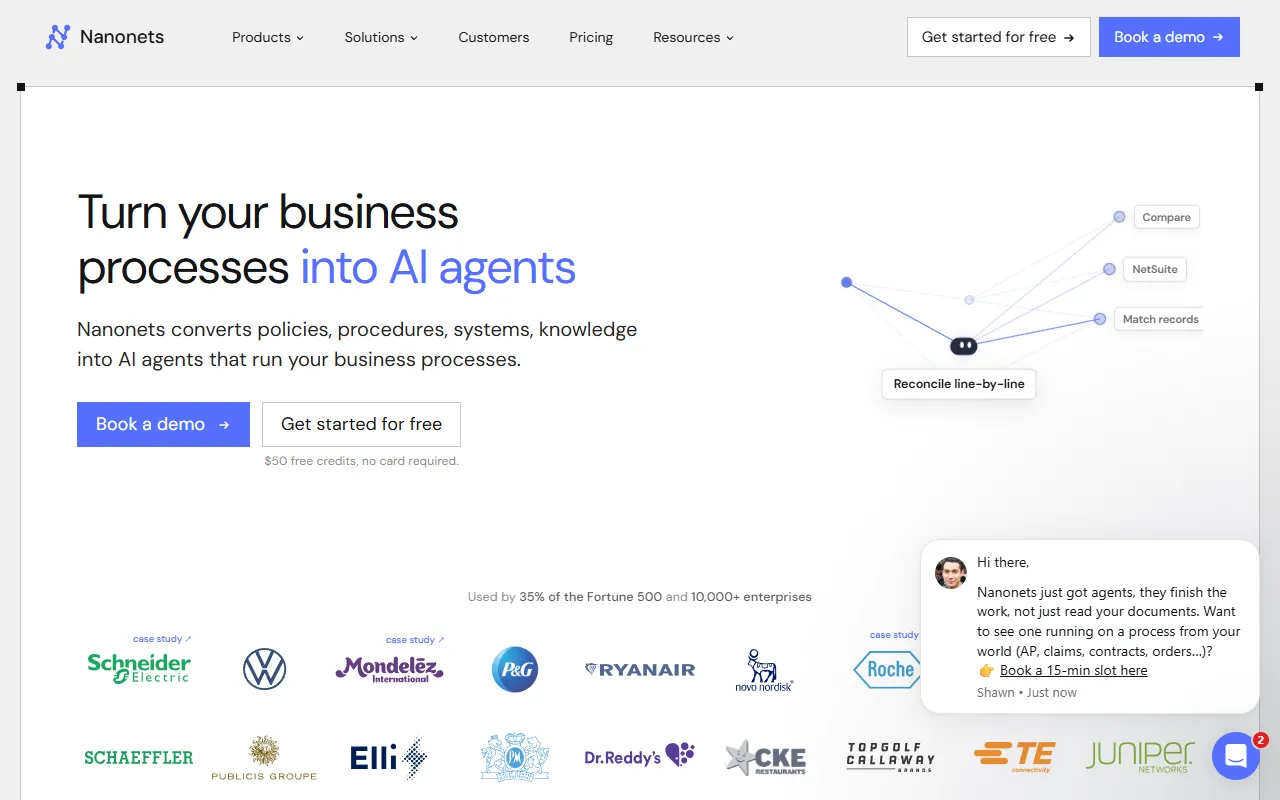
What is Nanonets?
Nanonets is an AI APIs tool that automates manual processes and delivers clean data to systems of record. Nanonets is a paid tool. A free trial is available. It is aimed at enterprises, finance teams and operations teams.
Nanonets automates manual processes like accounts payable and order management, delivering clean data to systems such as SAP and Salesforce. It uses AI agents to handle complex tasks and improve efficiency.
Built for enterprises, finance teams and operations teams.
Key capabilities
Features
AI Agents
Work tirelessly to handle tasks without human intervention
Context Graphs
Help agents solve complex problems with contextual data
Self-Learning Loops
Exception SOP
ERP Order Record
Call Notes & Email
Return History
Use cases
- Automate accounts payable processes
- Automate order management workflows
- Deliver clean data to systems of record like SAP and Salesforce
Popular use cases
Who it's for
- Enterprises
- Finance Teams
- Operations Teams
Pros & cons
Pros
- Public API available
- Free trial available
- Integrates with Zapier
Cons
No documented limitations yet.
Pricing
Paid. Free trial available.
| Plan | Price |
|---|---|
| Starter | $50 |
| Standard | $0.1 |
Integrations
AI models
- GPT 5
Developer & API
Public webhook API available
- Authentication
- API Key
- Webhooks
- Supported
Security & compliance
- SOC 2
- ISO 27001
- GDPR
- HIPAA
- SSO
- SAML
- Encryption
- Data deletion
As stated on Nanonets's website — not independently verified by AiByts.
FAQ
What is Nanonets?
Nanonets is an AI APIs tool that automates manual processes and delivers clean data to systems of record. Nanonets automates manual processes like accounts payable and order management, delivering clean data to systems such as SAP and Salesforce. It uses AI agents to handle complex tasks and improve efficiency.
Is Nanonets free?
No, Nanonets is a paid tool. A free trial is available.
How much does Nanonets cost?
Nanonets offers 2 plans: Starter ($50) and Standard ($0.1).
Does Nanonets have an API?
Yes, Nanonets offers a public webhook API with webhooks for building custom integrations.
Who should use Nanonets?
Nanonets is built for enterprises, finance teams and operations teams. Common uses: automate accounts payable processes, automate order management workflows and deliver clean data to systems of record like SAP and Salesforce.
What does Nanonets integrate with?
Nanonets integrates with Slack, Zapier, Notion, Google Drive, Google Sheets, Gmail, Outlook and Excel, among 31 integrations.
What are the best alternatives to Nanonets?
Similar tools on AiByts include Respira for WordPress, TypeSafe AI, Dialogflow Conversational AI, Fireworks AI and Social Fetch.
Nanonets news & updates
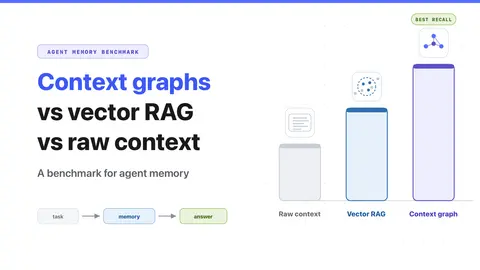
Context Graphs vs Vector RAG vs Raw Context - Agentic memory benchmark
We benchmark context graphs against other methods of agentic memory, and discuss what each method got right and wrong.
Nanonets Blog20 min read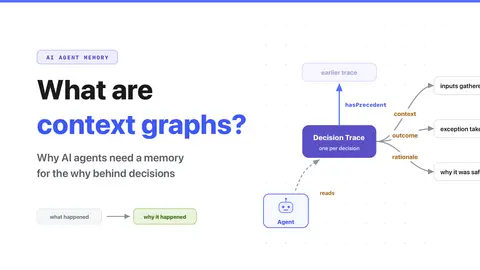
What Are Context Graphs? (And Why AI Agents Need Them)
We explain why AI agents need to capture decisions, how context graphs achieve this, and how AI agents can use these graphs.
Nanonets Blog20 min read
SAP Sapphire 2026: The Complete Breakdown
All 25 announcements from Orlando, what's actually shipping vs. what's marketing — and what it means for the document and data foundation of the autonomous enterprise.SAP's Sapphire 2026 in Orlando was the most AI-dense keynote in the company's history. Christian
Nanonets Blog10 min read
Claude for Legal Teams: Contract Review, Compliance and Due Diligence
See how the Claude legal plugin helps in-house legal teams with contract review, compliance scanning, due diligence, obligations tracking, and drafting.
Nanonets Blog11 min read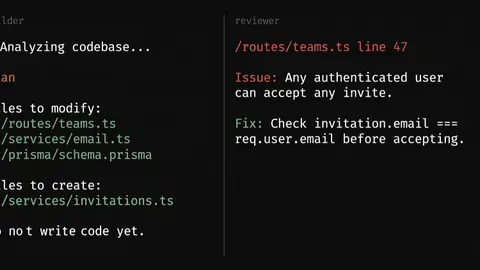
Vibe Coding Best Practices: 5 Claude Code Habits for Better Agentic Coding
Learn 5 practical vibe coding best practices for Claude Code and coding agents: CLAUDE.md, planning, review agents, safer prompts, and diff review.
Nanonets Blog10 min read
AI Benchmarks Explained: GPQA, SWE-bench, Chatbot Arena and What They Actually Measure
Learn what MMLU, GPQA Diamond, SWE-bench, HealthBench, and Chatbot Arena actually measure, and how labs game benchmark scores.
Nanonets Blog12 min read
Why AI-Native IDP Platforms Outperform ABBYY and Kofax in Modern Document Workflows
Evaluating IDP vendors? Compare Nanonets vs ABBYY and Kofax across architecture, operating model, and TCO to see why AI-native wins for IDP.
Nanonets Blog6 min read
Why You Hit Claude Limits So Fast: AI Token Limits Explained
Learn what AI tokens are, why Claude hits limits fast, and how to cut waste from context windows, history, files, tools, and reasoning.
Nanonets Blog12 min read
Did Google's TurboQuant Actually Solve AI Memory Crunch?
Google’s TurboQuant promises 6x KV-cache compression. Here’s what it means for AI memory, HBM demand, and the broader memory crunch.
Nanonets Blog9 min read
Claude for Finance Teams: Investment Banking, DCF Models, Reconciliation & Variance Analysis
A practical guide to using Claude for investment banking materials, comparable company analysis, DCF models, month-end reconciliation, and variance commentary, with screenshots, setup steps, and honest caveats.
Nanonets Blog12 min read
AI Agent Hacks McKinsey: 5 Situations When You Should Not Deploy Agents
McKinsey hacked in 2 hours. 5 situations where AI agents will fail. Production permissions, regulated data, legacy systems—check before deploy.
Nanonets Blog10 min read
Are OpenAI and Google intentionally downgrading their models?
Yes, OpenAI and Google degrade their models. OpenAI admitted silent updates after denying it. Gemini redirects models. With full evidence.
Nanonets Blog11 min read
We ran 16 AI Models on 9,000+ Real Documents. Here's What We Found.
We benchmarked GPT-5.4, Gemini 3.1 Pro, Claude Opus, Sonnet, and 12 others on 3 Open OCR Benchmarks
Nanonets Blog6 min read
AI Arms Race Has Real Numbers: Pentagon vs China 2026
AI targeting systems executed 900 strikes in 12 hours, a pace that previously took weeks. Maven, Palantir, and frontier models are operational in active conflict. The Pentagon just banned Anthropic and switched to OpenAI while strikes continue. The arms race has numbers now.
Nanonets Blog10 min read
Stop Paying for AI You Don't Use: The Case for Fine-Tuned Models
Processing 10,000 documents daily through GPT or Claude costs $50K annually. Fine-tuned models: $5K. Same accuracy. Faster latency. Data never leaves your control. But most teams don't realize this is now viable. Here's when frontier models make sense and when you're overpaying.
Nanonets Blog8 min read
Details are compiled from Nanonets's website and public sources, last verified Oct 5, 2026. Features and pricing change — confirm on the official site before you buy.
Try Nanonets
Paid
Tags
- AI Agents
- Workflow Automation
- Data Extraction
- Context Graphs
- Exception Management
Comments
Sign in to join the discussion.