

Qodo
AI code review tool with agentic workflows for IDEs, PRs, and security.
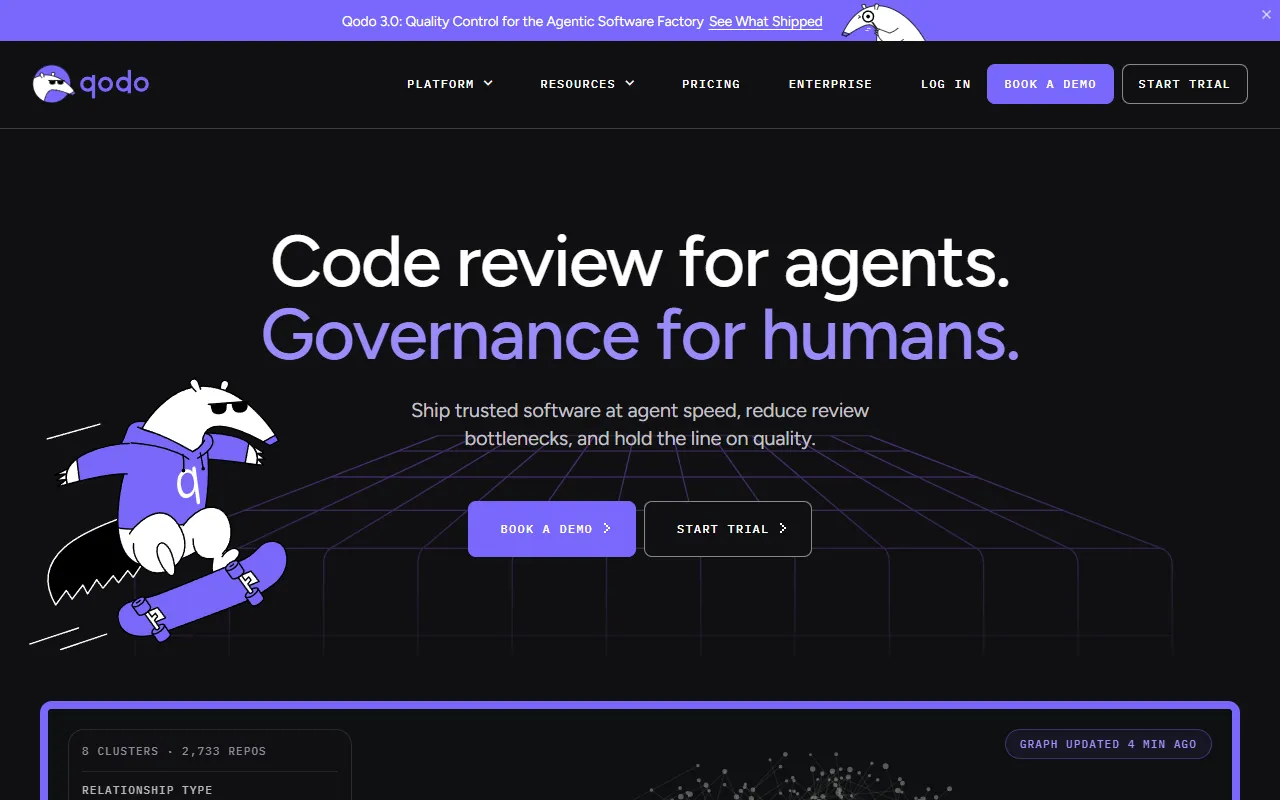
What is Qodo?
Qodo is a Code Review tool. AI code review tool with agentic workflows for IDEs, PRs, and security. Qodo is a paid tool. A free trial of 14 days is available. It is aimed at developers, engineering teams and security teams.
Qodo is an AI code review tool that provides deep codebase context to help teams improve code quality and move faster. It offers 15+ agentic workflows for IDEs, PRs, and security, enabling context-aware PR validation and shift-left review skills.
Built for developers, engineering teams and security teams.
Features
Rule Enforcement
Ensures that coding standards and rules are enforced.
Rule Health Monitoring
Quality Governance
Maintains quality across the software development lifecycle.
Risk Intelligence
Audit Trail
Repo Relationship Mapping
System of Record
Use cases
- Enforce coding standards early in the development process
- Monitor the health of coding rules and standards
- Maintain quality governance across the software development lifecycle
- Track risks and potential issues in the codebase
Who it's for
Pros & cons
Pros
- Offers 15+ agentic workflows for IDEs, PRs, and security
- Provides deep codebase context to improve code quality
- Supports integration with major development platforms
Cons
- No free plan available
- Requires credit system for usage
Pricing
Paid. Free trial of 14 days available.
| Plan | Price |
|---|---|
| Pro Team | $30 |
| Enterprise | Custom |
Security & compliance
- SOC 2
- SSO
- SAML
- Data deletion
As stated on Qodo's website — not independently verified by AiByts.
FAQ
What is Qodo?
Qodo is a Code Review tool. AI code review tool with agentic workflows for IDEs, PRs, and security. Qodo is an AI code review tool that provides deep codebase context to help teams improve code quality and move faster. It offers 15+ agentic workflows for IDEs, PRs, and security, enabling context-aware PR validation and shift-left review skills.
Is Qodo free?
No, Qodo is a paid tool. A free trial is available.
How much does Qodo cost?
Qodo offers 2 plans: Pro Team ($30) and Enterprise (Custom).
Who should use Qodo?
Qodo is built for developers, engineering teams and security teams. Common uses: enforce coding standards early in the development process, monitor the health of coding rules and standards, maintain quality governance across the software development lifecycle and track risks and potential issues in the codebase.
What does Qodo integrate with?
Qodo integrates with GitHub, GitLab, Bitbucket, Azure, VS Code and JetBrains.
What are the best alternatives to Qodo?
Similar tools on AiByts include CodiumAI, Antigravity CLI, CodeRabbit, Zentask and AI Code Completion by DeepCode.
Qodo news & updates
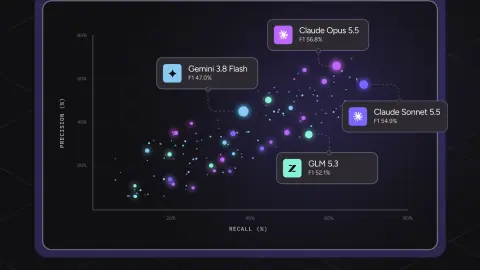
Which LLM should review your code?
New frontier models ship almost every month. Each release can change the balance of quality, cost, and speed available to teams building with AI. Code review brings those trade-offs into focus: how many bugs can a model catch, how much noise does it create, and what does each review cost?
CodiumAI Blog7 min read
From Delegation to Collaboration: Inside Qodo’s Dark Factory
TL;DR Agent-to-agent communication is becoming an important research area for AI companies. As agents grow more capable, their ability to communicate, plan, challenge one another, and work toward a shared objective may produce gains that cannot be achieved by improving each agent independently.
CodiumAI Blog12 min read
Does Jev make AI code review more efficient?
An extra AI check earns its place by verifying behavior the existing workflow missed. I evaluated Jev, TypeSafe’s structured-judgment model, alongside selected automated checks and Qodo code review.
CodiumAI Blog5 min read
Introducing Qodo 3.0: Quality and Governance for the Agentic Software Factory
Engineering organizations are building toward an agentic software factory, where agents take on more of the work at every stage of the SDLC, and the systems that govern quality need to keep pace with that shift.
CodiumAI Blog6 min read
What Every Software Factory Needs That No Model Will Provide
I spend most of my weeks talking with CTOs and engineering leaders, from consumer apps, and e-commerce, via chip makers and automotive to financial institutions, defense industries and global banks.
CodiumAI Blog8 min read
The 2026 State of AI Code Quality Report: Verification Is the New Bottleneck
AI-related production failures stopped being hypothetical some time ago. In our new research, 89% of organizations report having had an AI-related production incident, and only 3.7% of engineering leaders say their existing processes are sufficient to maintain quality and governance as agents take…
CodiumAI Blog6 min read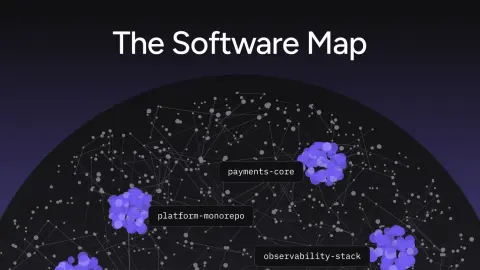
Introducing the Software Map in Qodo: Risk, Mapped Across Every Repo
Most engineering organizations have a diagram of their architecture. Almost none of them describe the system as it exists today. That was survivable when code moved at human speed. A service got added every few months. Someone updated the wiki page eventually.
CodiumAI Blog7 min read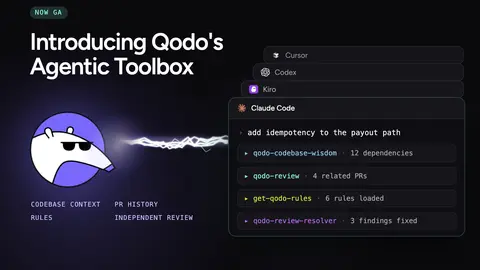
Built for Agents, Better Outcomes for Humans: Introducing Qodo’s Agentic Toolbox
Today, Qodo is excited to release our new Agentic Toolbox, a packaged set of tools and skills that brings Qodo’s Context Engine, independent review, and governance capabilities directly into coding agent workflows.
CodiumAI Blog6 min read
Introducing Qodo for Codex: Quality Built Into the Agentic Workflow
In OpenAI’s Codex, a change can move from plan to implementation to passing tests in a single session. That workflow becomes even more valuable when quality is built into it from the start, with the agent drawing on what your organization already knows and its work reviewed independently.
CodiumAI Blog6 min read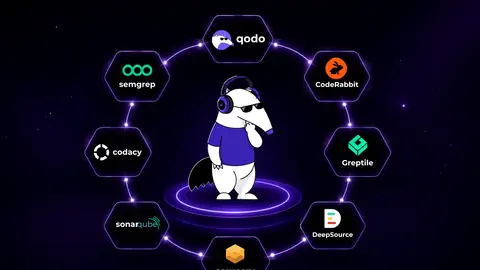
Best Codacy Alternatives in 2026
AI code review has moved fast. Teams no longer expect just linting and style enforcement, they want a layer that catches real production risk before code ships, and most platforms in this category have raced to add one.
CodiumAI Blog24 min read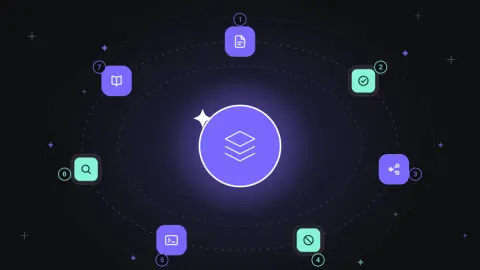
7 Agent Skills for Engineering Work Coding Agents Miss
Code generation is only one part of software delivery. These skills make the planning, testing, workflow safety, developer experience, and documentation around the code more explicit. AI coding agents are good at responding to concrete implementation requests.
CodiumAI Blog11 min read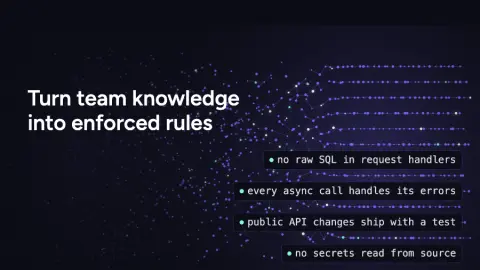
How Qodo Builds the Wisdom to Govern, Part 2: The Rules Lifecycle System
Part 1 of this series described the Context Engine, the knowledge layer that gives review agents a verified picture of the system a change lands in: repository structure, pull request history, cross-repository relationships, and the requirements behind the work. Context answers what is there.
CodiumAI Blog11 min read
How do you efficiently steer AI coding agents?
The way you steer a coding agent shapes where it looks, which constraints it treats as important, and how much work it spends rediscovering a repository. Useful agent guidance still has a hard limit: it can influence behavior without proving that the required behavior even occurred.
CodiumAI Blog7 min read
Tune what your reviewers see first: Qodo Advanced Configurations
Qodo recently introduced a set of configurations for tuning code review to your team’s workflow: when reviews run, which standards apply, how much of each finding a developer sees, and which repositories get stricter treatment. In our most recent release we went further.
CodiumAI Blog9 min read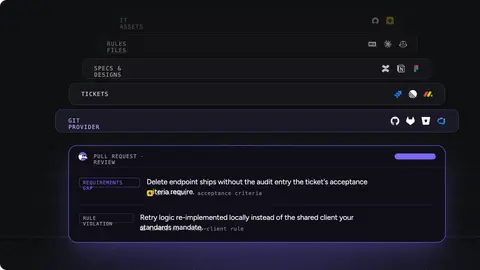
Qodo Integrations: Turning Your SDLC Into Review Context
Ask an engineering team about integrations and the question sounds like a checklist. Does it work with GitHub? Does it read Jira? Is there a VS Code plugin? Fair questions. But they miss what integrations actually do for code review. Every system Qodo connects to is a source of context.
CodiumAI Blog5 min read
Details are compiled from Qodo's website and public sources, last verified Oct 3, 2026. Features and pricing change — confirm on the official site before you buy.
Try Qodo
Paid
Comments
Sign in to join the discussion.