

Warp
Infrastructure for building and interacting with agents across SDLC
- Freemium· from $50/month
- API Available
- Open Source


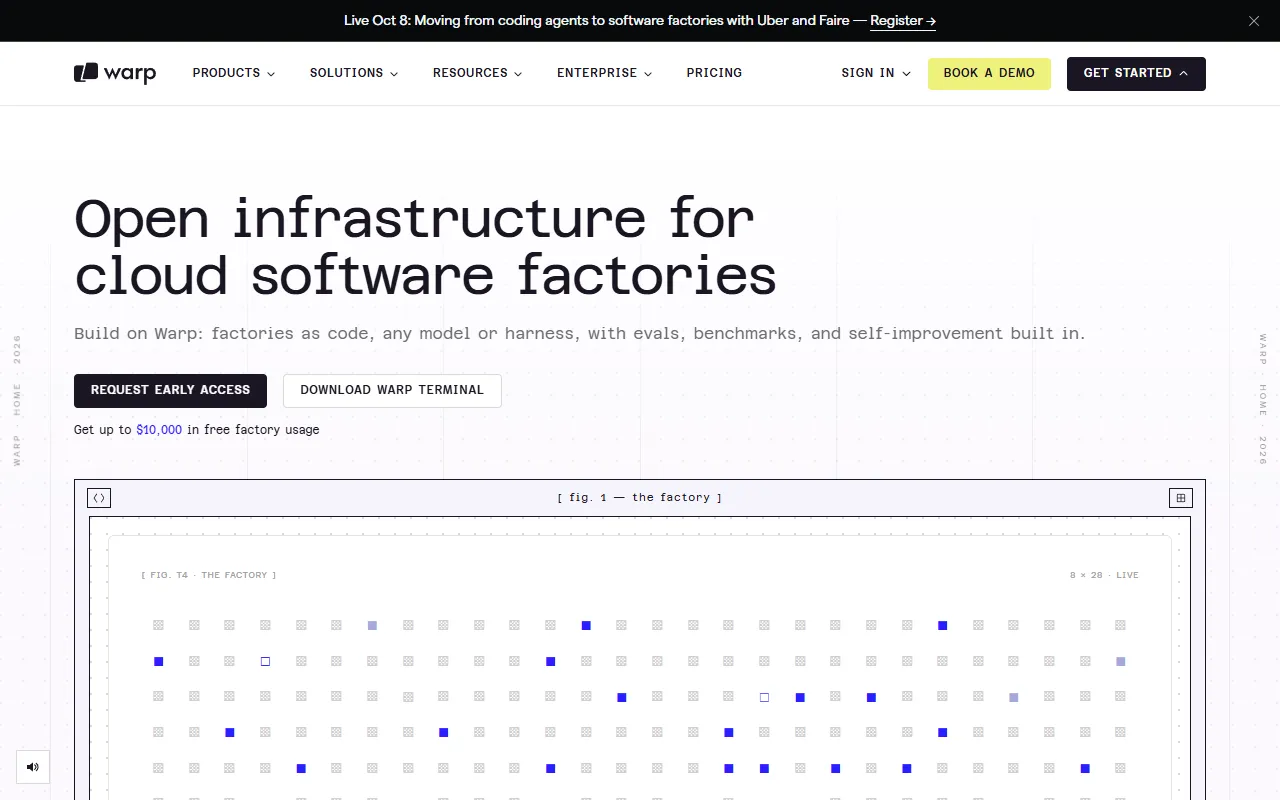
What is Warp?
Warp is an AI Website Builder tool. Infrastructure for building and interacting with agents across SDLC. Warp is freemium: it has a free plan, and paid plans start at $50/month. It is available on Windows, macOS and Linux. It is aimed at developers and enterprise teams.
Infrastructure to build, measure, and interact with agents across your SDLC — so you ship more and spend less. It supports automating the entire SDLC beyond CI/CD, with features like factories as code, API, CLI, SDK, and MCP interfaces. It is enterprise-ready with open layers and integrates with tools like Slack, GitHub, and Jira.
Built for developers and enterprise teams.
Key capabilities
Features
Factories as Code
Code-based creation of development workflows
API CLI SDK and MCP
Any Agent
Any Model
Data Location Control
Open Layers
Self-Improvement
Built-in measurement and self-improvement features
Enterprise Ready
Designed for enterprise use with compliance and security
Use cases
- Automate software development lifecycle processes
- Build and manage agents for development tasks
- Integrate with Slack, GitHub, and Jira for workflow automation
Popular use cases
Who it's for
Pros & cons
Pros
- Public API available
- Free plan available
- Enterprise analytics API
- SOC 2 compliance with zero data retention
Cons
No documented limitations yet.
Pricing
Freemium — paid plans start at $50/month.
| Plan | Price |
|---|---|
| Free | Free |
| Max | $200 / month |
| Business | $50 / month |
| Enterprise | Custom |
AI models
- GPT 5
- Claude Opus 5
- Gemini 3.6 Flash
Developer & API
Public SDK API available
- Webhooks
- Supported
Open source· AGPL-3.0· 65.4K stars· 5.6K forks
Security & compliance
- SOC 2
- SSO
- SAML
- Encryption
- Data deletion
As stated on Warp's website — not independently verified by AiByts.
FAQ
What is Warp?
Warp is an AI Website Builder tool. Infrastructure for building and interacting with agents across SDLC. Infrastructure to build, measure, and interact with agents across your SDLC — so you ship more and spend less. It supports automating the entire SDLC beyond CI/CD, with features like factories as code, API, CLI, SDK, and MCP interfaces. It is enterprise-ready with open layers and integrates with tools like Slack, GitHub, and Jira.
Is Warp free?
Warp has a free plan; advanced features require a paid plan.
How much does Warp cost?
Warp offers 4 plans: Free (Free), Max ($200 / month), Business ($50 / month) and Enterprise (Custom).
Does Warp have an API?
Yes, Warp offers a public SDK API with webhooks for building custom integrations.
What platforms does Warp support?
Warp is available on Windows, macOS and Linux.
Who should use Warp?
Warp is built for developers and enterprise teams. Common uses: automate software development lifecycle processes, build and manage agents for development tasks and integrate with Slack, GitHub, and Jira for workflow automation.
What does Warp integrate with?
Warp integrates with Slack, GitHub, GitLab, Jira and Anthropic.
Is Warp open source?
Yes, Warp is open source under the AGPL-3.0 license.
What are the best alternatives to Warp?
Similar tools on AiByts include Lovable, Feathery, FoxyApps, Angie and Bitrise.
Warp news & updates
Overcoming challenges in software factory adoption
Software factory adoption is a people problem too. Learn how to get engineers excited and move agent setups from private laptops to shared team infrastructure.
Warp Blog5 min read
Addressing the code review bottleneck
Cut code review time for agent PRs with three levers: adversarial review agents, end-to-end verification with computer use, and merge risk scoring.
Warp Blog7 min read
Don’t vibe code your software factory
Build a production software factory, not a string of prompts: factories-as-code, durable orchestration, benchmarks and self-improvement, and native integrations.
Warp Blog9 min read
Updated GPG Signing key for Warp Linux Releases
As a precaution following last week’s security incident, we rotated the GPG signing subkey used for certain Warp Linux artifacts, with no evidence of unauthorized misuse.
Warp Blog2 min read
7 core components for building a software factory
Building a software factory? Here are the seven criteria we found table-stakes, from factories as code and benchmarks to computer use verification.
Warp Blog7 min read
Tactics for rolling out software factories: human and organizational changes
How to roll out software factories across an engineering org: start with chore automations, meet engineers in their tools, and track factory adoption.
Warp Blog9 min read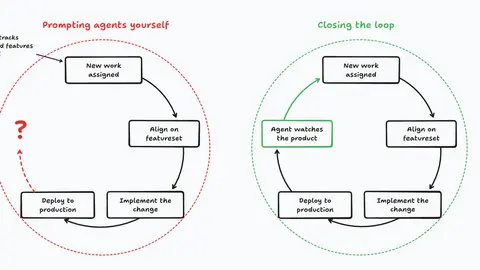
The road to self-improving software
Let agents decide what to build next: self-improving software factories that proactively fix bugs, refine their own skills, and mine user feedback for roadmap work.
Warp Blog6 min read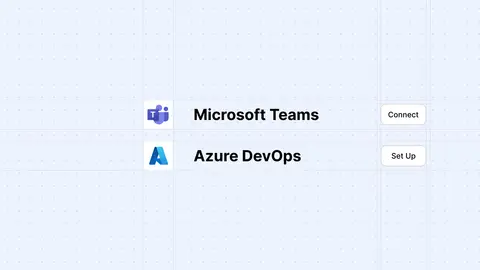
Warp Factories now works across Microsoft Teams and Azure DevOps
Warp Factories now integrates natively with Microsoft Teams and Azure DevOps. Delegate work to your agent software factory from Teams threads, Azure DevOps work items, and pull requests.
Warp Blog2 min read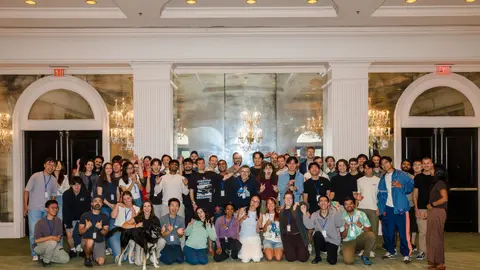
Build the factory. Let it run. Go kayaking.
During Warp team's Savannah off-site, we focused on making Warp Factories reliable, fast, and cost-effective. Then, we let the agents run while we went kayaking.
Warp Blog2 min read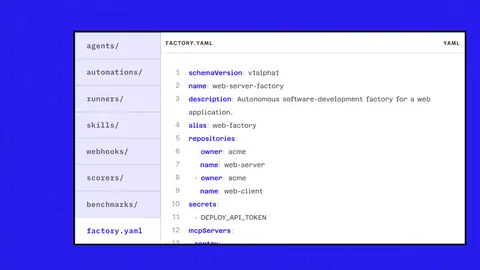
Terraform for agents: how we define our software factory in code
We define every agent in our software factory as code: orchestration, secrets, MCP servers, automations, runners, scorers, and benchmarks. Here’s a walkthrough of each part of the factory config.
Warp Blog8 min read
Sign in to Warp with ChatGPT
Use your ChatGPT subscription for AI requests in Warp Terminal and Warp Agent CLI.
Warp Blog1 min read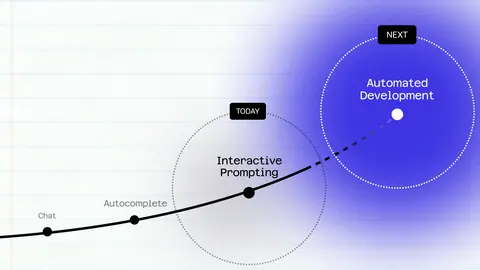
Adapting for a world of software factories
Software factories change what engineers do. At Warp, engineers now have two jobs: building the product, and building the factory that builds the product.
Warp Blog7 min read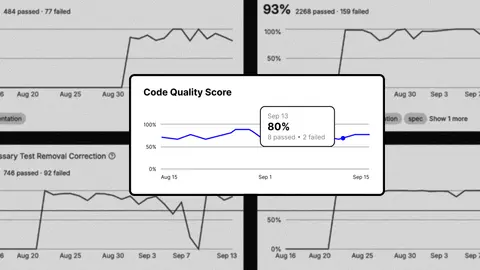
Using LLM-as-a-judge scoring to measure your software factory
If you want to get the most out of coding agents in your organization, you need to stop guessing how well your agents are performing and start measuring.
Warp Blog6 min read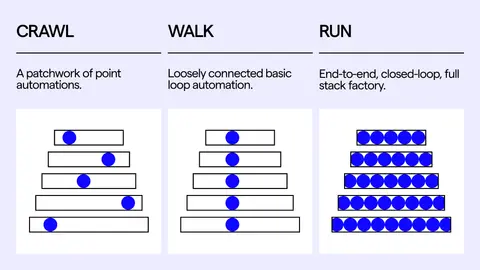
Adopting the software factory model: crawl, walk, run
A crawl, walk, run path for adopting the software factory model: start with point automations, stand up an end-to-end cloud development loop, then scale to a closed-loop factory stack.
Warp Blog9 min read
The Factory Stack
Software factories should be built on an infrastructure stack that is open, composable and defined in code.
Warp Blog7 min read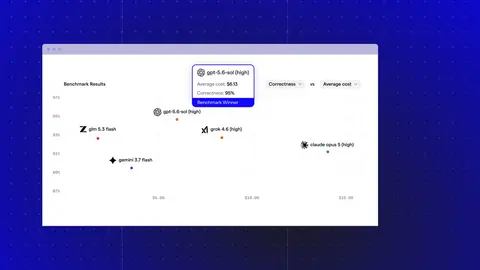
Introducing Factory Benchmarks
Today we are launching Benchmarks in Warp Factories early access: agent benchmarks on your own code that drive direct improvements in software factory performance.
Warp Blog5 min read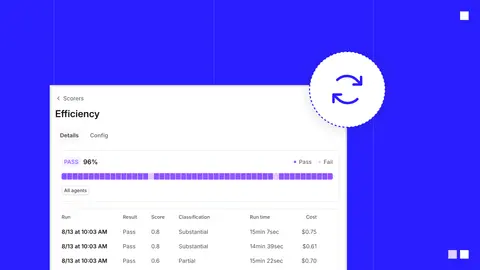
Closing the loop with self-improving cloud software factories
It's time to apply a true engineering mindset to deploying coding agents. Set up a closed-loop system in the cloud where every agent is tracked and measured against your own data and workflows, so you can tune your setup on real data instead of vibes.
Warp Blog9 min read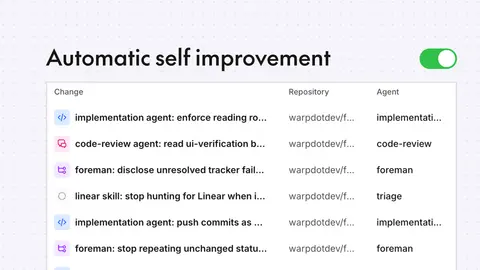
The missing feedback loop for software factories
Warp Factories make it easy to automate your SDLC with coding agents. The harder challenge is building a factory that learns from feedback and improves with your team.
Warp Blog7 min read
Details are compiled from Warp's website and public sources, last verified Oct 5, 2026. Features and pricing change — confirm on the official site before you buy.
Try Warp
Freemium · from $50/month
Tags
- SDLC Automation
- Agent Development
- Code Factories
Comments
Sign in to join the discussion.