v0.7.0
LLM inference in C/C++. Contribute to ggml-org/llama.cpp development by creating an account on GitHub.
llama.cpp11 min read
Stay updated with the latest developments in Artificial Intelligence
LLM inference in C/C++. Contribute to ggml-org/llama.cpp development by creating an account on GitHub.


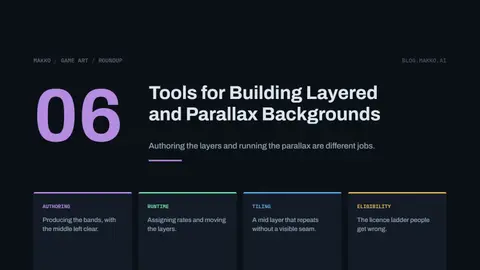
Authoring the layers and running the parallax are two different jobs, and most tools only do one. Here is which side each entry sits on.
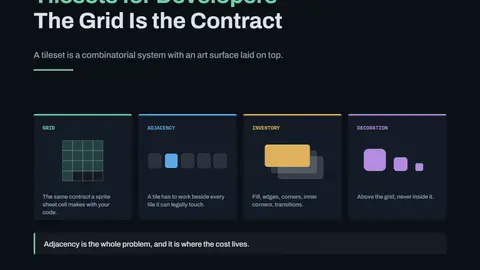
A tileset is a combinatorial system with an art surface. Adjacency is the real cost, and decoration above the grid is what keeps the count down.
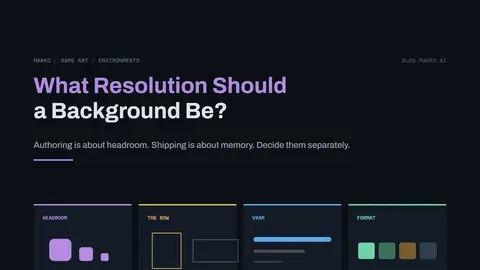
Two questions, not one. Authoring resolution is about headroom, shipping resolution is about memory, and the gap between them is measured here.
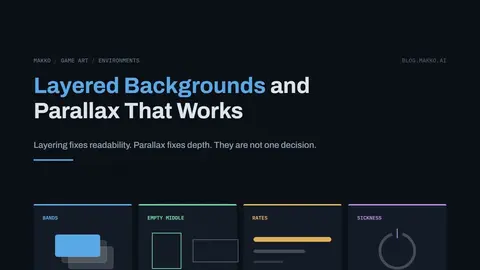
Layering fixes readability, parallax fixes depth. The band model, the four causes of parallax sickness, and when to skip it entirely.
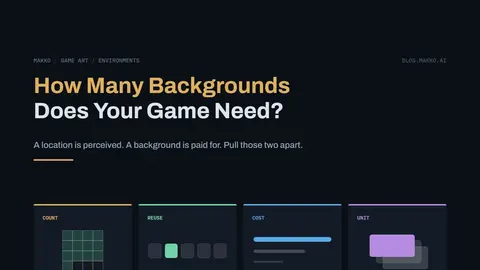
A location is perceived, a background is paid for. How to derive your own count, and the reuse multipliers that pull those two numbers apart.
Every importer asks for the same five numbers. Here is which of them each tool decides for you, and which it leaves on your desk.
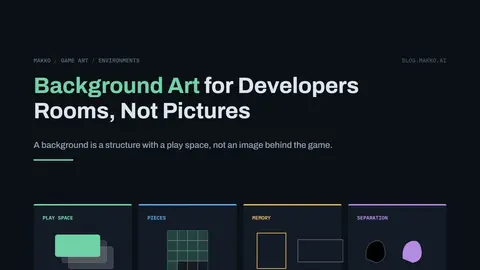
A background is a structure, not an image. The play space rule, the pieces a room assembles from, and why rooms cost more memory than your whole cast.
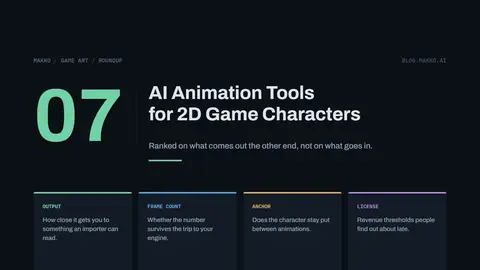
Ranked on what comes out the other end. A video or a loose image sequence has not finished the job, because your importer needs a sheet with a stated frame count and a stable anchor.
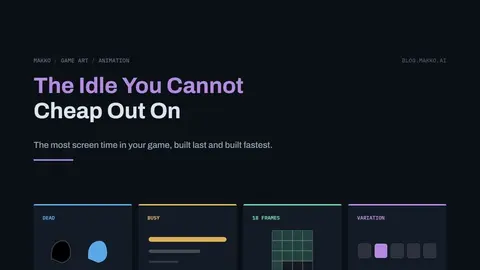
The animation with the most screen time in your game is the one built last and fastest. How to build it properly instead.
A loop has two seams, not one. Symptom to cause to fix, in the order you should check them.
The arithmetic, a starting table that sums to 47 frames per character, and why frames are not equally valuable inside one animation.
The price on the listing is not the cost. Licence checking, style mismatch and the pieces missing at week ten are, and every entry is priced on all three.
Which animations to build, how long each one runs, and the three properties you can judge without any craft knowledge at all.
Ranked on what game interface work actually needs: a full state set per element, export at multiple scales, nine-slice, and preview against a real scene rather than a neutral artboard.
The six ways icons fail at shipping size, the test that catches each one, and when plain text beats an icon.
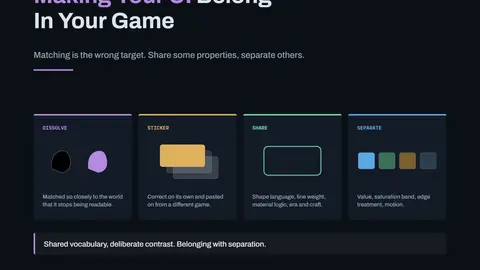
Matching is the wrong target. What an interface should share with the world it sits on, and what it has to keep separate.
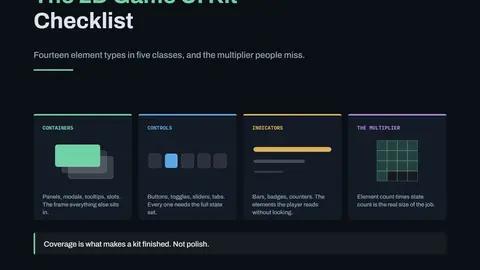
Fourteen element types in five classes, and the state multiplication that makes a finished UI set four to six times larger than the naive count.
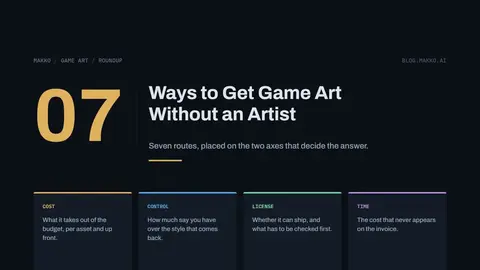
Seven routes, from CC0 libraries to hiring, placed on the two axes that decide the answer. Cheap routes surrender control over style. Expensive ones buy it back.
Showing 18 of 21 stories
Load more storiesGet the top AI news and tools straight to your inbox every week.
Weekly · AI news from Makko AI Blog
Join 15,000+ AI enthusiasts