Agents on live hardware: reason where you must, engineer everywhere else
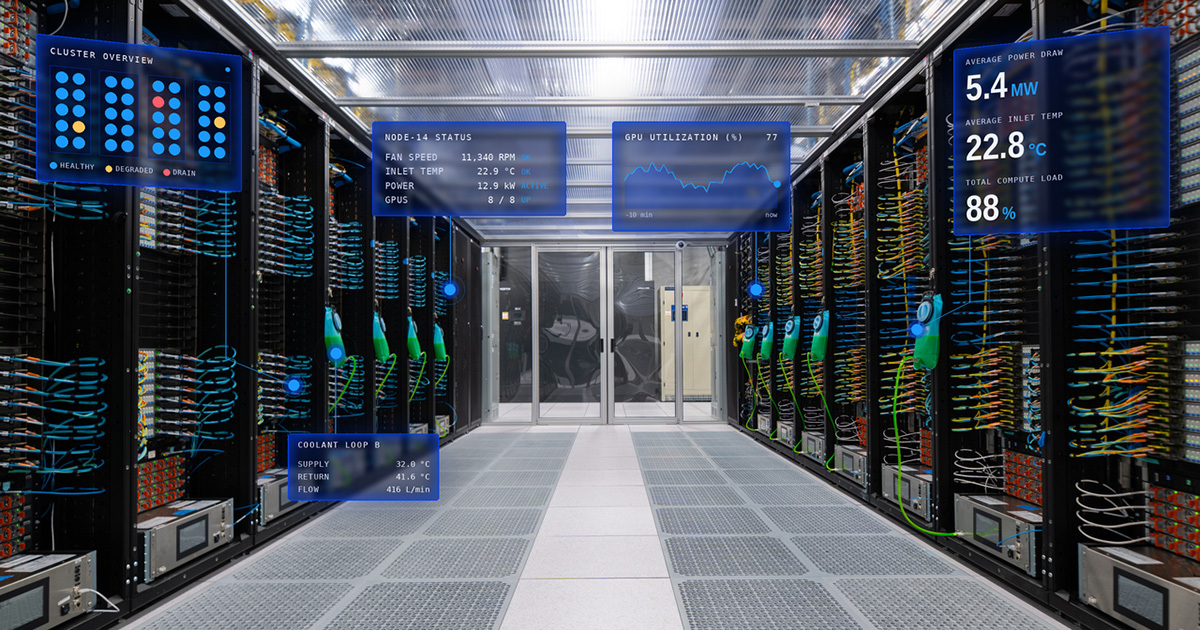
Five million signals a day, down to five alerts. How we used agents two different ways on one anomaly detection problem, and where the line moves over time.
Stay updated with the latest developments in Artificial Intelligence

Five million signals a day, down to five alerts. How we used agents two different ways on one anomaly detection problem, and where the line moves over time.
BackgroundArtificial intelligence (AI), especially machine and deep learning, is an emerging tool in medicine with growing applications in orthopedic imaging.
Cardiovascular diseases (CVDs) are the leading causes of death worldwide, have a growing disease burden, and present multiple challenges for precision management.
This article examines the current and future role of decision-support systems and automation in vestibular diagnosis across emergency, primary care, and specialty settings.
Spinal cord stimulation (SCS) is an established treatment for chronic pain, but long-term outcomes remain inconsistent. Failures may originate from poor therapeutic targeting and dosing, both of which can stem from low-resolution patient-reported inputs and the subjective, trial-and-error…
The quality of AI-generated output depends largely on how effectively the user constructs the prompt. This article provides a practical framework for developing effective prompts for dermatology applications by outlining 5 core components: persona, task, context, format, and constraints.
CONCLUSIONS: By using the GBDT, XGBoost, LR, RF, and nomogram models, a predictive model with substantial efficacy was effectively developed and validated for forecasting the HL levels of the population.
This article highlights the growing role of digital medicine in transforming the diagnosis and management of dizziness, vertigo, and other vestibular disorders.
Autism spectrum disorder (ASD) is a major global public-health concern, yet timely identification and support remain difficult to access for many families, especially in rural, low-resource, and otherwise underserved settings.
CONCLUSIONS: Persona-prompted LLMs effectively assisted preliminary content validation and may help reduce timelines from months to weeks, but showed limitations in quantitative computations.
CONCLUSION: AI scribe users reported positive experience with the technology and demonstrated reductions in documentation burden. Findings are exploratory and support larger, controlled evaluations of note quality and workflow impact.
This article explores how scientists positioned brain research in postwar Germany. Detlev Ploog imported technology-brain stimulation with implanted electrodes-to help reclaim the Max-Planck-Institute for Psychiatry's international stature, providing a neurophysiological basis for biological…
CONCLUSION: Nurses perceived potential benefits from AI-supported tools, but the quantitative findings did not establish an independent effect of AI or a statistically significant adjusted association between decision-making orientation and MNC.
CONCLUSION: Clinical artificial intelligence development in echocardiography is substantially more accessible than conventionally assumed. A single clinician using existing hardware and artificial intelligence-assisted coding can produce a validated view classifier with minimal annotation burden,…
Artificial intelligence (AI) and machine learning (ML) are transforming immunohematology, offering significant enhancements in precision, accuracy, and personalized transfusion care.
Healthcare services and data ecosystems remain fragmented, inequitable and misaligned with patient, clinician and public health needs. Three pathways to patient-centred Artificial Intelligence (AI) have emerged to address this: data collaboration, Whole System Approaches and digital inclusion.
CONCLUSIONS: Our findings suggest that the PVT-Enhanced framework combined with SHG imaging allows accurate, rapid, and label-free tissue characterization that may support intraoperative margin assessment in CRC surgery.
The female reproductive tract is essential for fertility, pregnancy, and overall health, yet many of its cellular components remain poorly defined. Recent advances in single-cell and spatial transcriptomics have begun to reveal this complexity, but inconsistent naming of cell types and states has…
CONCLUSION: Cognitive-motor intervention provides sustained cognitive benefits after stroke. RF modelling may assist in the early identification of patients with a high potential for recovery, thereby supporting individualised rehabilitation.
Showing 18 of 50 stories
Load more storiesGet the top AI news and tools straight to your inbox every week.
Weekly · AI news from PubMed - AI Research
Join 15,000+ AI enthusiasts