v0.7.0
LLM inference in C/C++. Contribute to ggml-org/llama.cpp development by creating an account on GitHub.
llama.cpp11 min read
Stay updated with the latest developments in Artificial Intelligence
LLM inference in C/C++. Contribute to ggml-org/llama.cpp development by creating an account on GitHub.


Five years into the AI-assisted coding experiment, I rarely find myself saying "wow" anymore. We, as an industry, have honed the prompt-to-code pipeline to just about the finest point imaginable.
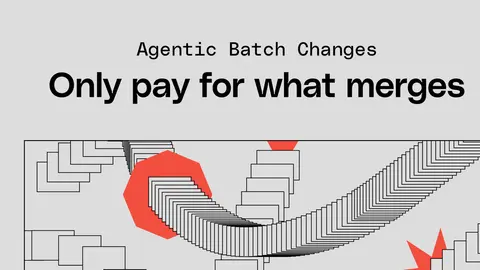
Agentic Batch Changes is now available, and we price it on outcomes: you only pay for changesets that merge.
Codebase-wide changes across hundreds or thousands of repositories can now be run by one engineer.
Deep Search runs scripts in a sandbox around Sourcegraph search APIs, so a migration audit returns a CSV checklist instead of thousands of files worth of tokens.
Better code retrieval does not automatically mean better task completion. Here is how to measure retrieval, agent performance, and cost without confusing one for another.
Regulated engineering teams must prove which files an AI agent read before it shipped a change. How scoped retrieval turns agent context into an audit trail.
Code Finder runs its own search loop and hands your coding agent the exact files and line ranges, faster and cheaper than the agent searching on its own.
Vulnerability remediation breaks down at codebase scale: AI code without context, detection coverage gaps, and fixes that take weeks across 10,000 repos.
A finding in one repo is a fact. A security posture means knowing whether that same problem exists everywhere else, and fixing it before it spreads.
Agentic Batch Changes is now in public beta: an AI agent that scopes, executes, and ships large-scale code migrations across hundreds of repositories until every PR is mergeable.
AI coding agents are producing more code than ever, but the world still runs on massive, decades-old codebases. Why owning and understanding them may be the hardest job in software.
The bottleneck in most large-scale migrations is not the engineers or the plan. It is that the tools cannot see the whole codebase.
Every engineering org has the files nobody wants to open. Here's what that actually costs.
On nine CodeScaleBench tasks designed to evaluate agent effectiveness in large codebases, Claude Sonnet 4.6 with the Sourcegraph MCP server outscored Fable 5, winning six of nine at roughly half the cost for each point of quality.
How Sourcegraph uses HackerOne webhooks and Deep Search to automatically validate, triage, and investigate vulnerability reports before engineers start their day.
How Sourcegraph's security team evolved from a Slack-based triage bot to programmatic SIEM detection with expression-based auto-close rules.
Dependency prefixes like ^ and ~ make updates easy, but the version ranges they create widen the path a compromised package can take into production.
A Slack bot triages every GitHub advisory, posts a rocket-to-trigger ask in the channel, and on one human reaction runs the full content pipeline: detection queries, blog scaffold, social drafts, a 35-second auto-cut demo.
Showing 18 of 30 stories
Load more storiesGet the top AI news and tools straight to your inbox every week.
Weekly · AI news from Sourcegraph Cody Blog
Join 15,000+ AI enthusiasts