

5 Tips To Train Your AI Tools: Get Rid of Those Hallucinations
Put your AI tools in the ring with these tips on training against hallucinations.
Salesforce Einstein + Agentforce Blog7 min read
117 stories
Put your AI tools in the ring with these tips on training against hallucinations.
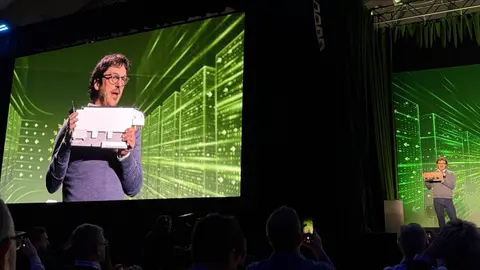
For three years, artificial intelligence infrastructure has been dominated by one idea: Bigger is better. Bigger models, bigger clusters, and bigger checks written to a small group of suppliers. At this week’s Open Compute Project Global Summit, Intel Corp.
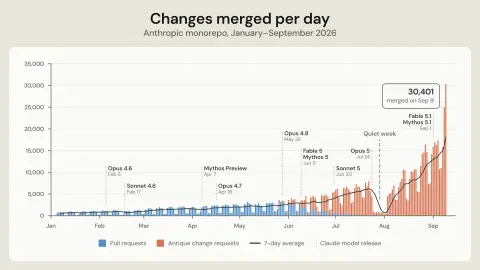
Redesigning source control at Anthropic Interesting piece from Anthropic describing why and how they built their own custom alternative to Git, based on the dramatic increase in rate of changes to their code after the past six months.
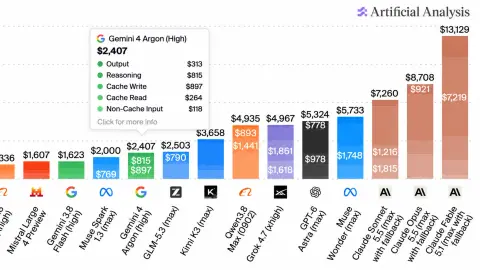
Release: llm-gemini 0.35 I added support to llm-gemini for the new Gemini 4 Argon model, made available today via the Gemini API and for customers of their $100/month subscription plan. Here are the low, medium and high pelicans.
Grok 4.7 is now available on Amazon Bedrock. In this post, we build a tool-calling agent on Grok 4.7 and evaluate it on three reasoning tasks at four reasoning effort levels, measuring correctness and token cost per completed task.
If the agent isn't using my diagnostics library, I could introspect and update AGENTS.md, but there's still a delta, and it'll drift. Instead, I write a pre-commit hook that checks the git diff for direct calls to observability modules that bypass my diagnostics module.

Cybersecurity company Trellix today launched Trellix Wise for Private Cloud to let enterprises run its artificial intelligence engine for security operations entirely inside their own environments.
Open models and llm-d enabled IBM Research to explore quantum error correction hardware at 11.5× lower inference cost than an all-proprietary configuration.
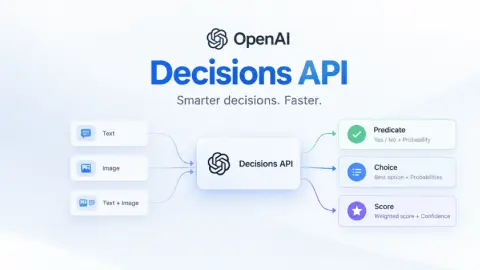
Imagine building an AI agent that has to decide whether a customer complaint needs human intervention, which department should handle a query, or whether a submitted delivery photo is valid. Getting these decisions right matters.

Release: llm-meta-ai 0.2 Meta AI release Muse Wonder (and Muse Wonder Full), their new "most capable models". These look like they may be Meta's first Fable class models - Artificial Analysis scores Muse Wonder (Max) as equivalent to GPT-6.1 Sol. I updated my llm-meta-ai plugin for the new model.

Meta unveils new AI models, Muse Wonder and Wonder Full, designed for complex tasks. It says it has caught up to rivals like OpenAI and Anthropic.
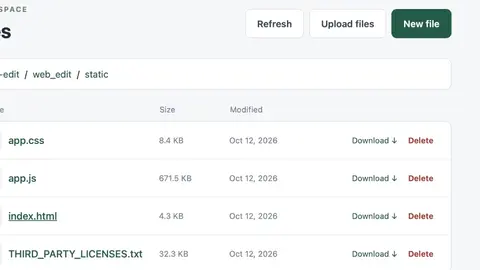
Release: web-edit 0.1a0 I was working on a project from my phone using Codex Remote when I found myself wanting to edit a credentials file without round-tripping those credentials through the LLM itself. So...
Erik Peterson discusses why AI spend is eclipsing cloud bills, triggering a major software engineering cost crisis. He explains tokenmaxxing, unit economics, forced developer promotions, and why fully autonomous AI will write, deploy, and govern code by 2028. By Erik Peterson

Distributed inference serving is an air traffic control tower for AI traffic, and agentic workflows make it more necessary than ever.

Many large companies have spent the past few years investing in artificial intelligence infrastructure, software and implementation. Boards approved the plans. Finance built the business cases. Procurement negotiated for computing capacity. One question remained.

Japanese semiconductor materials giant Sumitomo Bakelite plans to expand production of advanced chip packaging materials in China and Singapore, marking the second such announcement for its Chinese operations in less than four months as artificial intelligence drives demand for more sophisticated…
Anthropic detailed the activity of its A.I. agents in a blog post on Friday, without naming the targeted websites. But two sources with knowledge of the incidents said Anthropic’s A.I. agents had submitted 20 visa applications through a form available on the State Department’s website.
Everyone is very concerned about being respectable, so I’m going to be the goofball who raises worst-case possibilities. I think there is a 1% chance we live in Minicrypt, and a 15% chance we functionally lose confidence in our existing public-key encryption algorithms.
Showing 18 of 117 stories
Load more storiesGet the top AI news and tools straight to your inbox every week.
Weekly · AI news
Join 15,000+ AI enthusiasts