
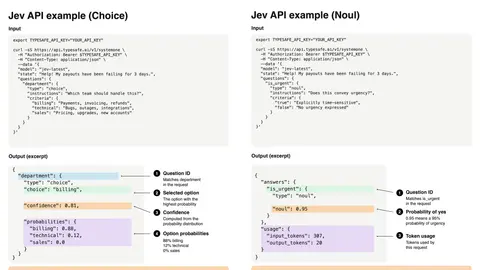
It's Easy to Dismiss Jev as Just a Classifier
A short note on Jev's generalization, possible encoder-style architecture and training, and Choice and Noul API examples.
Sebastian Raschka2 min read
36 stories
A short note on Jev's generalization, possible encoder-style architecture and training, and Choice and Noul API examples.

This cute little robot duck isn't actually a toy. It's actually a platform for budding roboticists to train on and develop skills. But heck, this might be the most fun design for a hackable machine we've seen yet.Continue ReadingCategory: Robotics, EngineeringTags: Robot, Artificial Intelligence
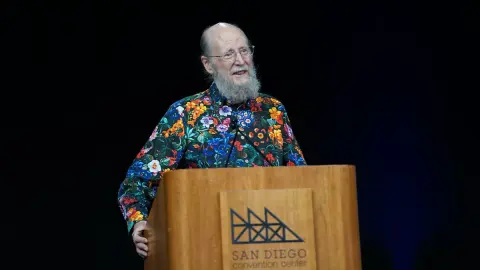
Richard Sutton compressed The Bitter Lesson into 26 words. What it means, why he now says LLMs break it, and what it changes for anyone building with AI.
AI agents don't get better by reading more of the internet — they get better by practicing inside simulated worlds built for exactly that purpose. This deep dive explains how modern agents actually learn: why human training data hit a wall, how the reinforcement learning loop works, the…

Short note announcing the release of Build a Reasoning Model From Scratch and linking the publisher and Amazon pages.
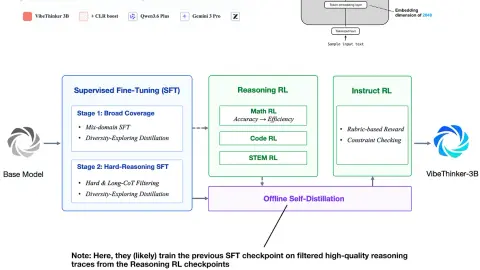
A closer look at VibeThinker-3B, a Qwen2.5-Coder-based model whose reported reasoning gains come from a detailed post-training pipeline.
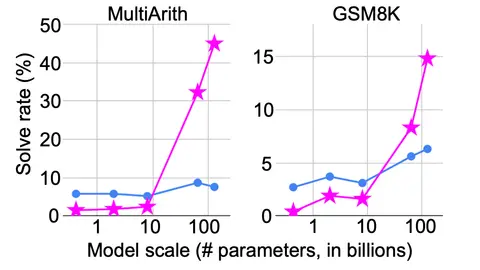
Special thanks to John Schulman for a lot of super valuable feedback and direct edits on this post. Test time compute (Graves et al. 2016, Ling, et al. 2017, Cobbe et al. 2021) and Chain-of-thought (CoT) (Wei et al. 2022, Nye et al.
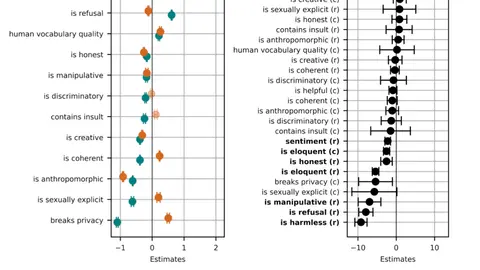
Reward hacking occurs when a reinforcement learning (RL) agent exploits flaws or ambiguities in the reward function to achieve high rewards, without genuinely learning or completing the intended task.

Is Attention all you need? Mamba, a novel AI model based on State Space Models (SSMs), emerges as a formidable alternative to the widely used Transformer models, addressing their inefficiency in processing long sequences.
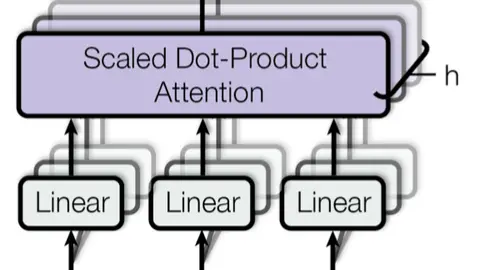
Many new Transformer architecture improvements have been proposed since my last post on “The Transformer Family” about three years ago. Here I did a big refactoring and enrichment of that 2020 post — restructure the hierarchy of sections and improve many sections with more recent papers.
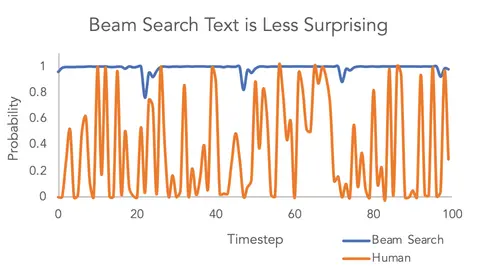
[Updated on 2021-02-01: Updated to version 2.0 with several work added and many typos fixed.] [Updated on 2021-05-26: Add P-tuning and Prompt Tuning in the “prompt design” section.] [Updated on 2021-09-19: Add “unlikelihood training”.]
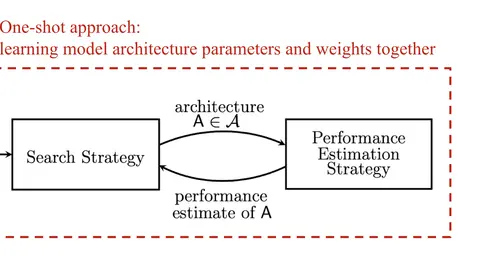
Although most popular and successful model architectures are designed by human experts, it doesn’t mean we have explored the entire network architecture space and settled down with the best option.
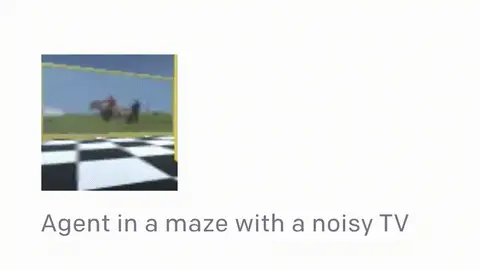
[Updated on 2020-06-17: Add “exploration via disagreement” in the “Forward Dynamics” section. Exploitation versus exploration is a critical topic in Reinforcement Learning. We’d like the RL agent to find the best solution as fast as possible.
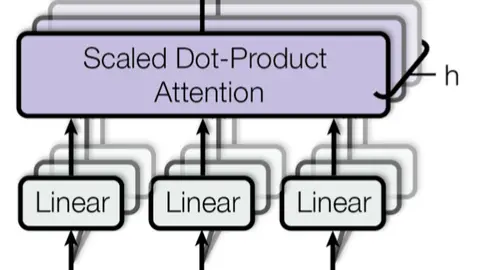
[Updated on 2023-01-27: After almost three years, I did a big refactoring update of this post to incorporate a bunch of new Transformer models since 2020. The enhanced version of this post is here: The Transformer Family Version 2.0. Please refer to that post on this topic.]
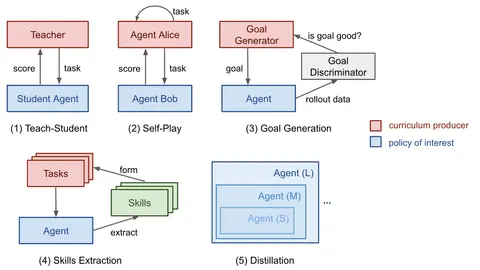
[Updated on 2020-02-03: mentioning PCG in the “Task-Specific Curriculum” section. [Updated on 2020-02-04: Add a new “curriculum through distillation” section.
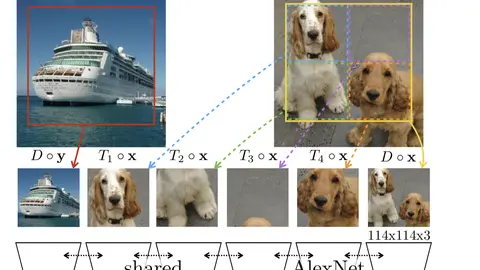
[Updated on 2020-01-09: add a new section on Contrastive Predictive Coding]. [Updated on 2020-04-13: add a “Momentum Contrast” section on MoCo, SimCLR and CURL.] [Updated on 2020-07-08: add a “Bisimulation” section on DeepMDP and DBC.] [Updated on 2020-09-12: add MoCo V2 and BYOL in the “Momentum…
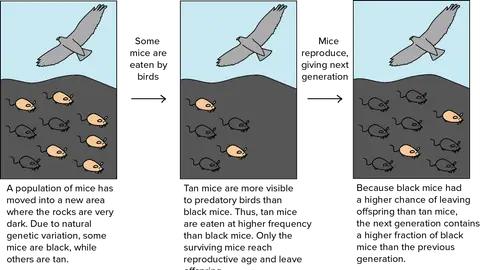
Stochastic gradient descent is a universal choice for optimizing deep learning models. However, it is not the only option. With black-box optimization algorithms, you can evaluate a target function $f(x): \mathbb{R}^n \to \mathbb{R}$, even when you don’t know the precise analytic form of $f(x)$ and…
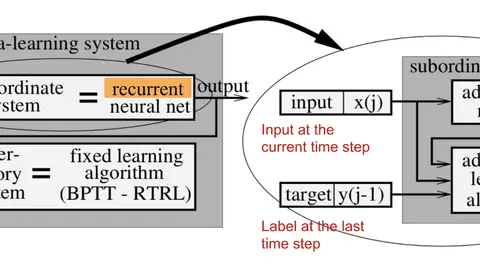
In my earlier post on meta-learning, the problem is mainly defined in the context of few-shot classification. Here I would like to explore more into cases when we try to “meta-learn” Reinforcement Learning (RL) tasks by developing an agent that can solve unseen tasks fast and efficiently.
Showing 36 of 36 stories
You're all caught up.
Get the top AI news and tools straight to your inbox every week.
Weekly · AI news
Join 15,000+ AI enthusiasts