
AI Research Agents: How They Search, Analyze, and Synthesize Information
Learn how AI research agents plan searches, evaluate evidence, synthesize findings, and produce cited reports with human review.
Rerun Blog12 min read
507 stories
Learn how AI research agents plan searches, evaluate evidence, synthesize findings, and produce cited reports with human review.
Autonomous driving decision systems must balance safety, efficiency, and social norms in complex traffic interactions. Philosophical and ethical considerations have received limited attention in existing autonomous driving decision-making approaches based on numerical optimization, sequence…
Not every RAG stack needs another database. If your application already runs on PostgreSQL, pgvector may be enough for storing embeddings, filtering results, and running semantic search.
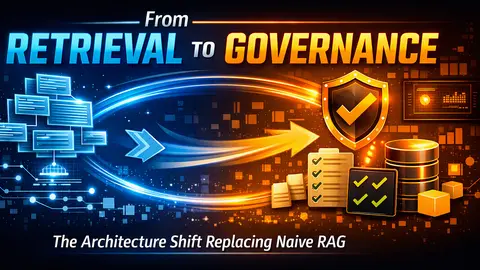
From Retrieval to Governance — The Architecture Shift Replacing Naive RAG Stop asking “How do we retrieve more chunks?” Start asking “How do we govern and structure what the model …
VentureBeat Intelligence surveyed respondents at organizations with 100 or more employees in August 2026. We asked where their AI agents get business context and whether those agents had given wrong answers traced to that context, once or more than once.

See how Runpod benchmarked four models across sixteen workload profiles to measure Overdrive inference performance, efficiency, and scaling behavior.
Build a Retrieval Augmented Generation (RAG) application on Amazon Bedrock Managed Knowledge Base with LangChain, and see how agentic retrieval handles the multi-part questions that single-shot retrieval answers poorly.
For all the data that AI systems continually amass and analyze, enterprise AI agents often suffer from a curious shortcoming: a lack of knowledge. More than data, knowledge is the understanding of what the data means in the context of individual organizations.
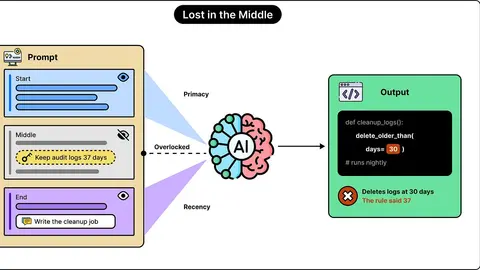
In this article, we’ll look at why LLMs have this bias against middle information.

Elegant object matching from several viewpoints The post Computer Vision: SIFT algorithm (Scale Invariant Feature Transform) appeared first on Towards Data Science.
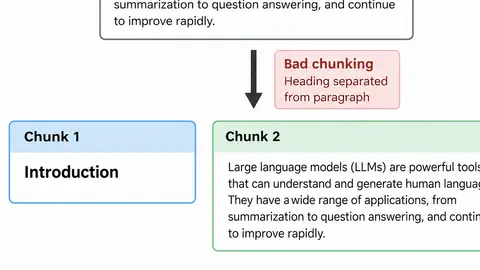
What retrieval failures taught me and why I built a small Python exercise that fails on purpose.Continue reading on Towards AI »
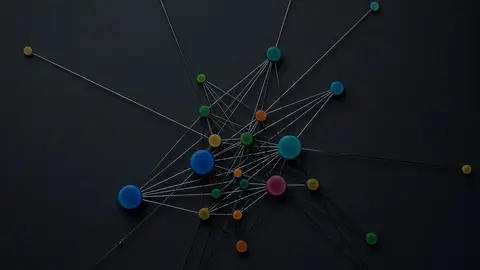
Vector Search Is Not Enough: The Blueprint of GraphRAG Vector search tells you what is similar; GraphRAG tells you how it is connected. Retrieval-Augmented Generation (RAG) has emerged as an …
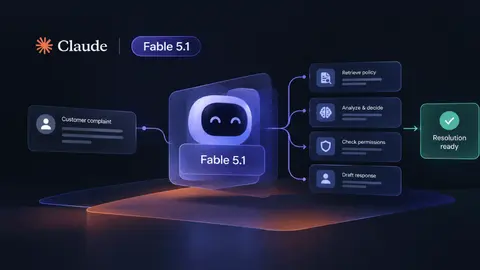
Most AI coding demos stop at task managers, weather apps, or simple chatbots. For this project, we take on something more demanding: building an enterprise customer-support platform that can investigate complaints, retrieve relevant policies, recommend resolutions, and keep risky actions behind…
RAG evaluation metrics with formulas and a worked example: precision@k, recall@k, MRR, nDCG, faithfulness and answer relevancy, plus why frameworks disagree.

Susan Chang explains how Elastic transitioned from siloed, ad-hoc AI agent evaluations to a unified, production-grade framework. She discusses balancing LLM-as-a-judge with deterministic rules, bridging Python data science evals with TypeScript production code, and implementing deep tracing to…

Model routing can finally be a design choice rather than a system enhancement The post How to Build a Cheap, Yet Reliable Model Router With Jev appeared first on Towards Data Science.
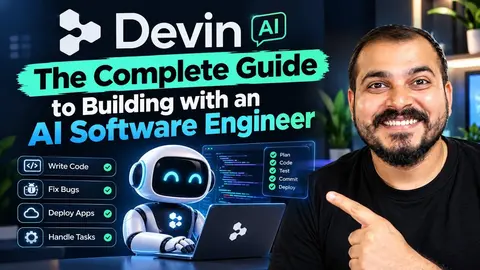
You can check out Devin Ai here:-https://get.aspr.app/SH21SY What can Devin, Cognition’s AI software engineer, actually do? In this video, we put Devin through a real engineering workflow by building an Agentic RAG system from end to end — while exploring the capabilities that make Devin more than…
Standard factual benchmarks assume clean monolingual prompts and exact-match scoring, two assumptions that break simultaneously in real-world multilingual deployment, from retrieval-augmented generation pipelines returning mixed-language passages to users pasting multilingual web content.
Showing 126 of 507 stories
Load more storiesGet the top AI news and tools straight to your inbox every week.
Weekly · AI news
Join 15,000+ AI enthusiasts