

Nano Imagine
Generates images, videos, and text via a unified AI API
What is Nano Imagine?
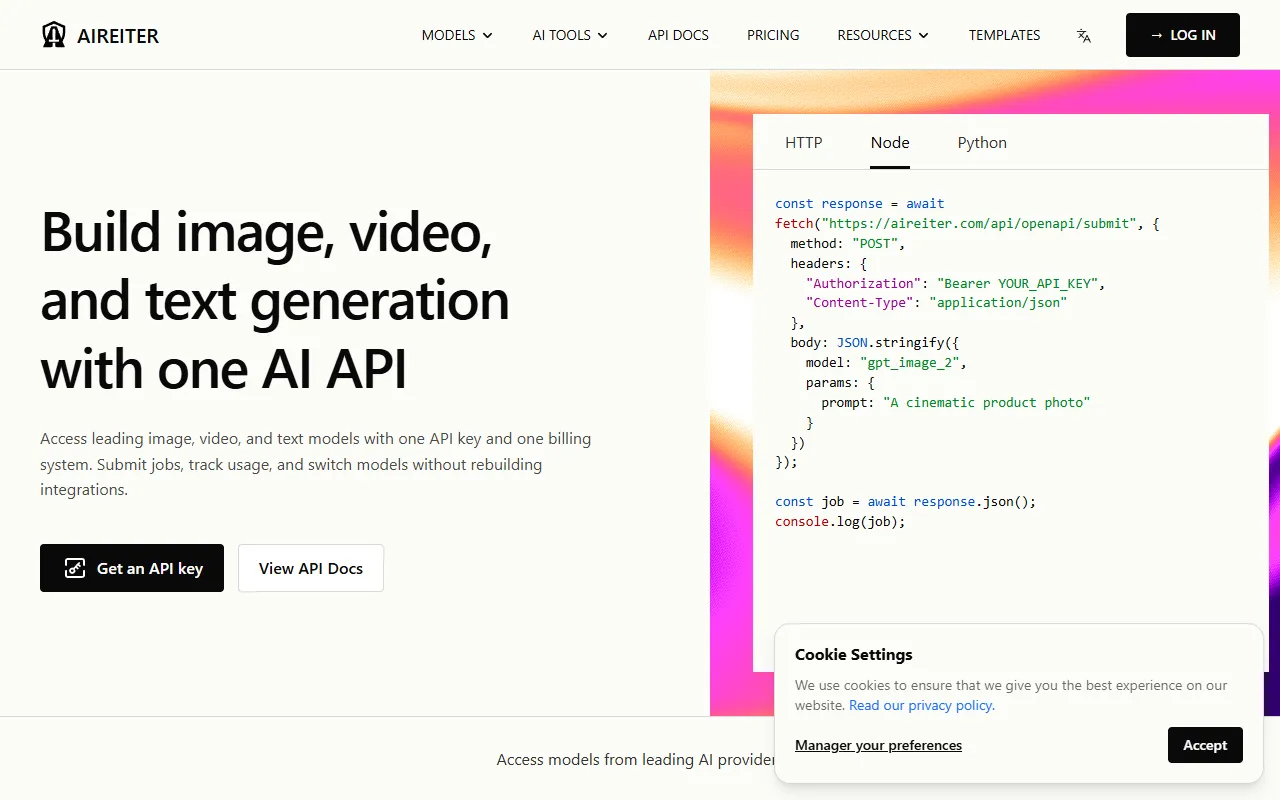
Nano Imagine is an AI Image Generation tool that generates images, videos, and text via a unified AI API. Nano Imagine is freemium: it has a free plan plus paid upgrades. It is aimed at developers, businesses and designers.
AIReiter provides a single API for image, video, and text generation, offering access to leading models through a unified billing system and developer workflow. It supports usage controls, higher-volume options, and integration support for various generation workflows.
Built for developers, businesses and designers.
Key capabilities
Features
AI Image API
AI Video API
LLM API
Usage Controls
Higher-Volume Options
Integration Support
API Key & Access Controls
AI APIs for Every Generation Workflow
From Prompt to Result in Three Steps
Submit a Job
Track Status
Retrieve the Result
Use cases
- Generate images from text prompts
- Create videos using AI generation workflows
- Produce text content through an API
Popular use cases
Who it's for
Pros & cons
Pros
- Public API available
Cons
No documented limitations yet.
Pricing
Freemium.
| Plan | Price |
|---|---|
| Standard | $0.1 |
AI models
- Kling
- Veo 3.1
- Seedance 2.0
- Wan 2.7
- Midjourney
- FLUX
- Seedream 5.0
- Nano Banana
- GPT Image 2
- GPT 5
- Claude Sonnet 5.5
- Suno
Developer & API
Public REST API available
- Authentication
- API Key, Bearer Token
- Webhooks
- Supported
Security & compliance
- Data deletion
As stated on Nano Imagine's website — not independently verified by AiByts.
FAQ
What is Nano Imagine?
Nano Imagine is an AI Image Generation tool that generates images, videos, and text via a unified AI API. AIReiter provides a single API for image, video, and text generation, offering access to leading models through a unified billing system and developer workflow. It supports usage controls, higher-volume options, and integration support for various generation workflows.
Is Nano Imagine free?
Nano Imagine has a free plan; advanced features require a paid plan.
How much does Nano Imagine cost?
Nano Imagine offers one plan: Standard ($0.1).
Does Nano Imagine have an API?
Yes, Nano Imagine offers a public REST API with webhooks for building custom integrations.
Who should use Nano Imagine?
Nano Imagine is built for developers, businesses and designers. Common uses: generate images from text prompts, create videos using AI generation workflows and produce text content through an API.
What are the best alternatives to Nano Imagine?
Similar tools on AiByts include GANBreeder, Artbreeder, Comicory, Midjourney and Civitai.
Nano Imagine news & updates
GPT-6 Intelligent UI Guide: Access, Prompts, Limits
Use this GPT-6 Intelligent UI guide to check access, write better prompts, validate generated controls, reduce visuals, and understand API limits.
Nano Imagine Blog8 min read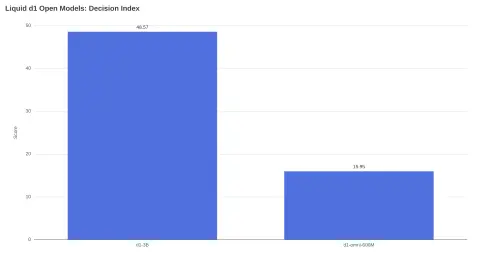
Liquid AI d1 API Review: Open Models vs Hosted Pricing
Liquid AI d1 API review covering $0.04/M hosted pricing, d1-3B vs d1-omni-600M, licensing, hardware, and local deployment trade-offs.
Nano Imagine Blog8 min readpplx-embed-v2-late API Pricing and PDF Retrieval Setup
pplx-embed-v2-late has no public API price yet. See current Perplexity embedding rates and a practical multimodal PDF retrieval setup.
Nano Imagine Blog8 min readClaude Haiku 5.5 API Pricing: The 100K Token Catch
Claude Haiku 5.5 API pricing explained with both prompt tiers, caching, Batch discounts, and a practical production cost rule.
Nano Imagine Blog6 min readEmbeddingGemma 2 Local Deployment: Migration Risk Guide
Plan an EmbeddingGemma 2 local deployment without corrupting retrieval. Compare runtimes, rebuild risk, vector dimensions, and mixed-modal quality.
Nano Imagine Blog9 min readNano Banana 2.1 API Pricing and Availability: Migration Guide
Nano Banana 2.1 API pricing, model ID, availability, output costs, migration risks, and how it compares with Nano Banana 2 and Pro.
Nano Imagine Blog6 min readEmbeddingGemma 2 API: Local Deployment and Multimodal Use Cases
EmbeddingGemma 2 API explained: local deployment, multimodal embedding support, model size, vector dimensions, and practical use cases.
Nano Imagine Blog6 min readClaude for Google Workspace Beta Review: Editing and Permissions
Claude for Google Workspace beta review: what Claude can edit in Docs, Sheets, and Slides, plus the permissions and automation limits.
Nano Imagine Blog7 min read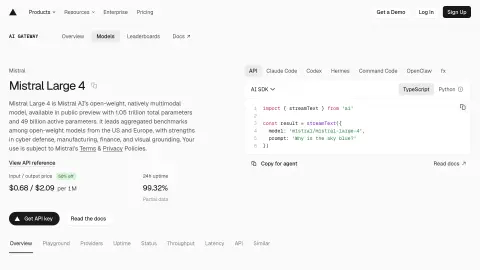
Mistral Large 4 API Pricing: What the Preview Really Offers
Mistral Large 4 API pricing, access, context limits, and benchmark caveats, with a practical decision rule for the public preview.
Nano Imagine Blog6 min read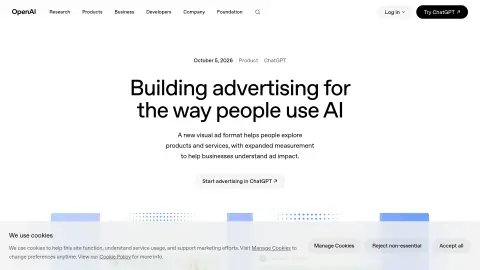
ChatGPT Visual Ads: What Advertisers Can Actually Test
ChatGPT visual ads are planned for a U.S. test in October 2026. Here is what OpenAI confirmed, what measurement supports, and what remains unknown.
Nano Imagine Blog5 min readfal genmedia CLI: Batch Queues, Retries, and Cost Control
Build a resumable fal genmedia CLI batch workflow with async queues, retries, manifests, cost checks, and a copyable Python wrapper.
Nano Imagine Blog8 min readBest Text to Speech API: ElevenLabs vs OpenAI, MiniMax and Kokoro
Compare the best text to speech API options by price, latency, voice quality, cloning, streaming, and deployment fit.
Nano Imagine Blog9 min read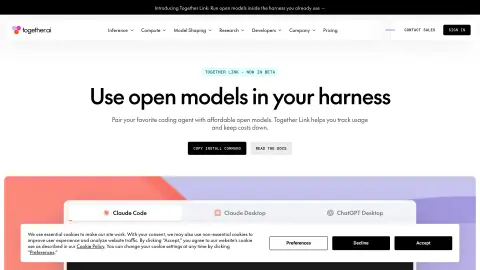
Together Link Review: Setup, Models, and Beta Limits
Together Link review covering setup, supported coding agents, model routing, billing, rollback, and whether the beta is ready for daily development.
Nano Imagine Blog5 min read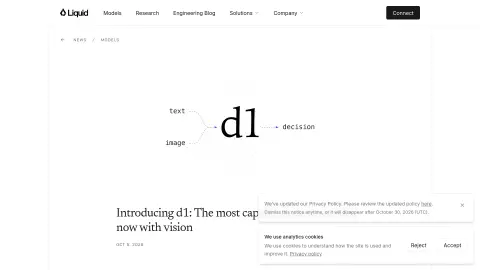
Liquid AI d1 API Review: Pricing, Vision, and Limits
Liquid AI d1 API review covering $0.04/M pricing, vision inputs, zero output tokens, API usage, benchmarks, and production limits.
Nano Imagine Blog7 min read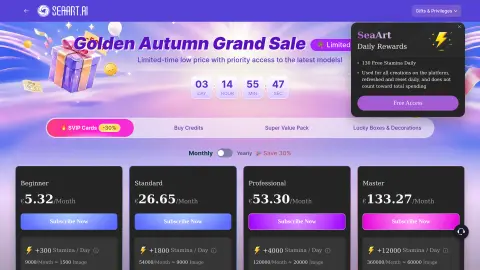
SeaArt AI Review 2026: Free Credits, Models, and Commercial Use
SeaArt AI review for 2026: test the free tier, model and LoRA library, pricing, image quality, video costs, and commercial-use risks.
Nano Imagine Blog7 min read
Seedream 5 Pro Prompt Guide: Chinese, Text, Consistency
A practical Seedream 5 Pro prompt guide with Chinese prompting tactics, text-layout controls, multi-subject consistency, and practical output settings.
Nano Imagine Blog8 min read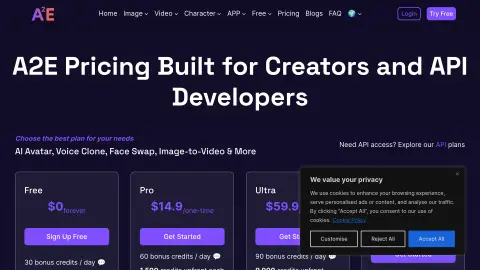
A2E Alternative: HeyGen, Hedra, or Higgsfield?
Looking for an A2E alternative? Compare HeyGen, Hedra, and Higgsfield Lipsync Studio by avatar quality, credits, pricing, and use case.
Nano Imagine Blog9 min readMiniMax Voice Clone: API Setup, Costs, and Limits
Learn how MiniMax voice clone works, which API route to use, what audio it accepts, and how to avoid common cloning failures.
Nano Imagine Blog7 min read
Details are compiled from Nano Imagine's website and public sources, last verified Oct 3, 2026. Features and pricing change — confirm on the official site before you buy.
Try Nano Imagine
Freemium
Comments
Sign in to join the discussion.