

Phoenix
Open source AI development platform for monitoring and improving AI quality.
- Freemium· from $50/month
- API Available
- Open Source
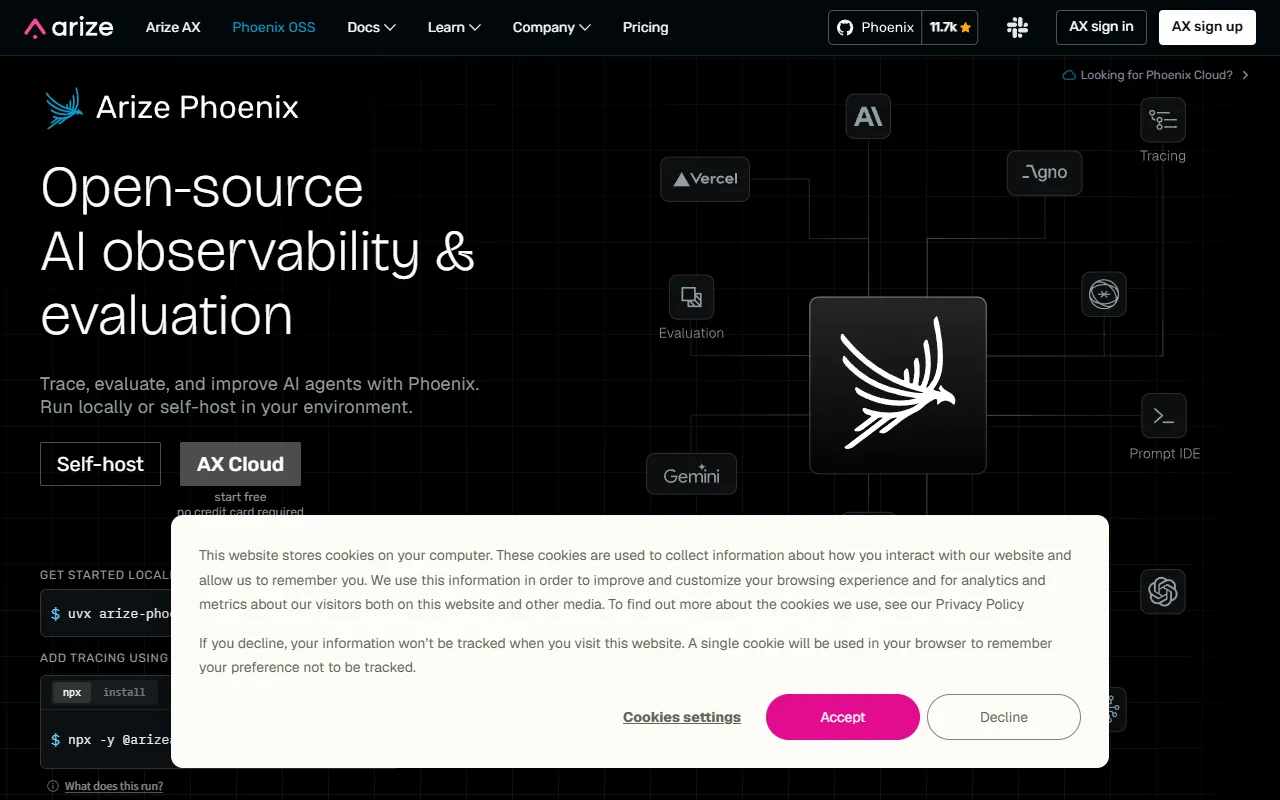
What is Phoenix?
Phoenix is a ML Development tool. Open source AI development platform for monitoring and improving AI quality. Phoenix is freemium: it has a free plan, and paid plans start at $50/month. It is aimed at ai engineers and fortune 500 companies.
Phoenix is an open-source platform for ML observability, enabling users to monitor and refine LLM, CV, and tabular models. It provides tools for testing changes with evidence and improving agent quality through systematic approaches.
Built for ai engineers and fortune 500 companies.
Key capabilities
Features
Measure And Improve Agent Quality
Test Changes With Evidence
Agent Native
Systematic Way To Improve AI Quality
Deploy Anywhere In Seconds
Engineers For Builders
Public API
Use cases
- Monitor and refine LLM, CV, and tabular models
- Test changes with evidence-based approaches
- Measure and improve agent quality systematically
- Deploy AI models anywhere in seconds
- Integrate with OpenAI and LangChain for enhanced functionality
- Use public API for custom integrations and automation
Who it's for
- AI Engineers
- Fortune 500 Companies
Pros & cons
Pros
- Public API available
- Free plan available
- Paid plans from USD 50/month
Cons
No documented limitations yet.
Pricing
Freemium — paid plans start at $50/month.
| Plan | Price |
|---|---|
| Pro | $50 / month |
| Free | Free |
Developer & API
Public SDK API available
- Authentication
- API Key
- SDKs
- TypeScript SDK, Python SDK, -g, Python, TypeScript
Open source· 11.7K stars· 1.2K forks
Security & compliance
- SOC 2
- ISO 27001
- GDPR
- HIPAA
- SSO
- Data deletion
As stated on Phoenix's website — not independently verified by AiByts.
FAQ
What is Phoenix?
Phoenix is a ML Development tool. Open source AI development platform for monitoring and improving AI quality. Phoenix is an open-source platform for ML observability, enabling users to monitor and refine LLM, CV, and tabular models. It provides tools for testing changes with evidence and improving agent quality through systematic approaches.
Is Phoenix free?
Phoenix has a free plan; advanced features require a paid plan.
How much does Phoenix cost?
Phoenix offers 2 plans: Pro ($50 / month) and Free (Free).
Does Phoenix have an API?
Yes, Phoenix offers a public SDK API for building custom integrations.
Who should use Phoenix?
Phoenix is built for ai engineers and fortune 500 companies. Common uses: monitor and refine LLM, CV, and tabular models, test changes with evidence-based approaches, measure and improve agent quality systematically and deploy AI models anywhere in seconds.
What does Phoenix integrate with?
Phoenix integrates with OpenAI and LangChain.
Is Phoenix open source?
Yes, Phoenix is open source.
Phoenix news & updates
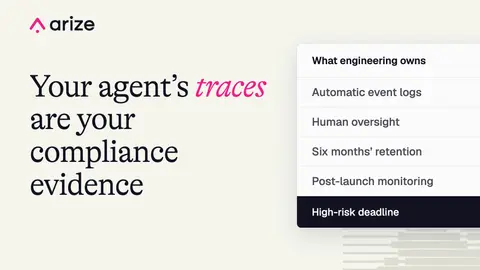
EU AI Act compliance for AI agents: a practical engineering guide
Learn how agent traces, human oversight, production evaluations, and log retention support EU AI Act compliance with a practical credit-assistant example. The post EU AI Act compliance for AI agents: a practical engineering guide appeared first on Arize AI.
Arize Phoenix14 min read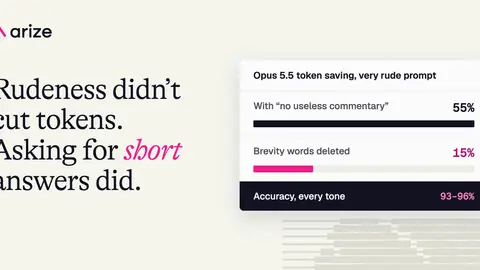
Does being rude to AI work? What 6 models revealed
Does being rude to AI improve answers or lower costs? We tested six models to separate prompt tone from brevity instructions and examine what changes. The post Does being rude to AI work? What 6 models revealed appeared first on Arize AI.
Arize Phoenix15 min read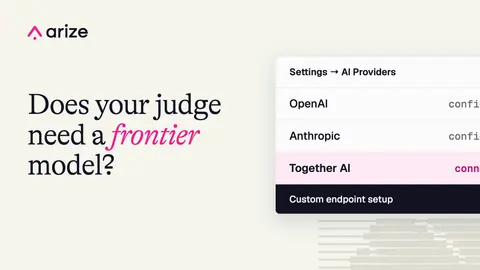
Together AI integration: Evaluate open models and optimize evaluation costs in Arize AX
Evaluate open models with Together AI in Arize AX. Compare model performance, run LLM-as-a-Judge evaluations, and explore lower-cost alternatives. The post Together AI integration: Evaluate open models and optimize evaluation costs in Arize AX appeared first on Arize AI.
Arize Phoenix4 min read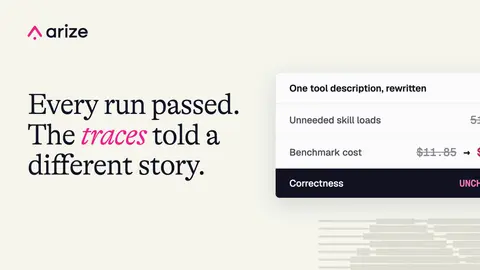
How to test agent tool descriptions with Harbor and Phoenix
Build a reproducible benchmark, compare tool use across agents, and test whether a description change reduces unnecessary work while preserving outcomes. The post How to test agent tool descriptions with Harbor and Phoenix appeared first on Arize AI.
Arize Phoenix9 min read
Alignment is a human-AI workflow: how Custom Views make agent review possible
Automated evals can score every agent session, but they do not automatically reflect what your team considers a good outcome. That takes human judgment. The post Alignment is a human-AI workflow: how Custom Views make agent review possible appeared first on Arize AI.
Arize Phoenix6 min read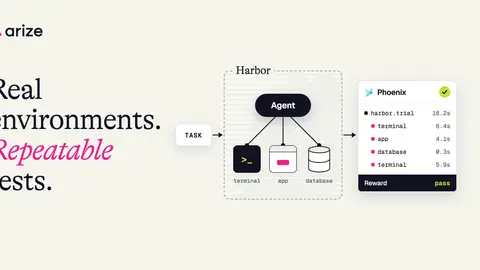
How we benchmark AI agents and tools with Harbor and Arize Phoenix
See how Arize uses Harbor and Phoenix to benchmark AI agents, MCP servers, skills, and CLIs in reproducible sandboxes, then inspect traces and annotations. The post How we benchmark AI agents and tools with Harbor and Arize Phoenix appeared first on Arize AI.
Arize Phoenix5 min read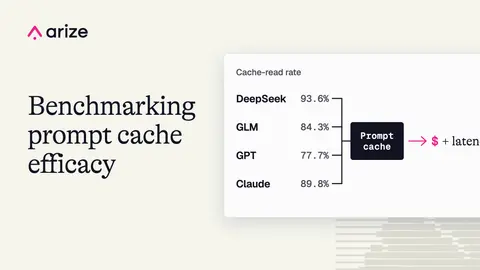
Prompt caching benchmark: high cache reuse doesn’t always mean lower cost
We benchmarked prompt caching across DeepSeek, GLM, GPT, and Claude using Harbor evals and Phoenix traces, so we could compare cache reuse, estimated cost, and latency on the same multi-turn shopping assistant agent.
Arize Phoenix7 min read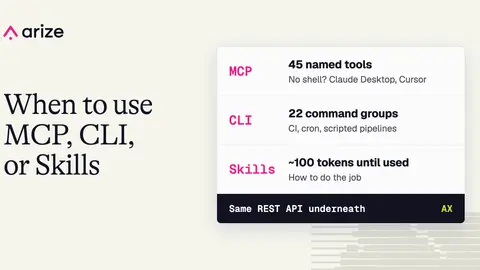
Introducing Arize AX MCP: When to use MCP, CLI, or skills
MCP, CLI, and skills are three ways to extend an agent with the same platform. The question is no longer which one wins. It is where the agent runs, and who is asking. The post Introducing Arize AX MCP: When to use MCP, CLI, or skills appeared first on Arize AI.
Arize Phoenix11 min read
Details are compiled from Phoenix's website and public sources, last verified Oct 3, 2026. Features and pricing change — confirm on the official site before you buy.
Try Phoenix
Freemium · from $50/month
Comments
Sign in to join the discussion.