

Reflexio
Turns static AI agents into self-improving systems.
- Freemium· from $299/month
- API Available
- Open Source
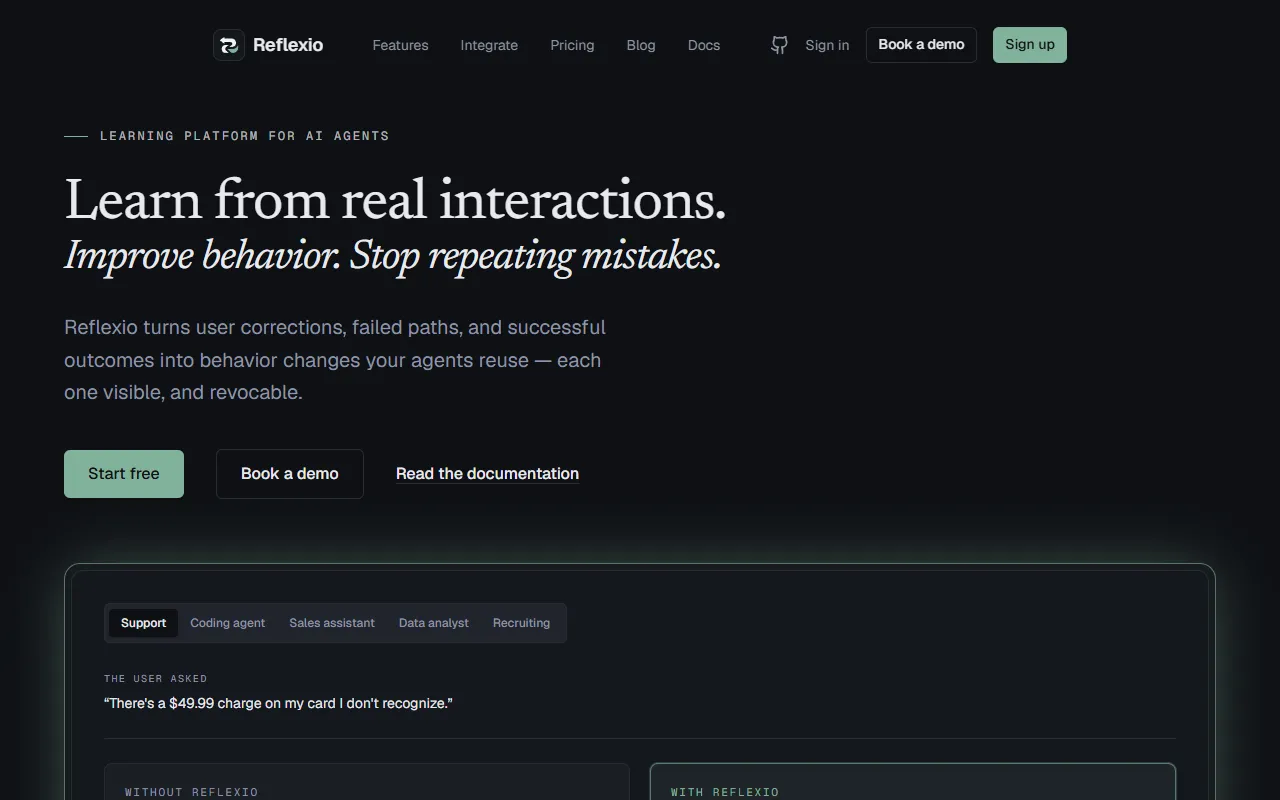
What is Reflexio?
Reflexio is an Autonomous Agents tool that turns static AI agents into self-improving systems. Reflexio is freemium: it has a free plan, and paid plans start at $299/month. It is aimed at developers and ai researchers.
Reflexio enhances AI agents by enabling them to autonomously reflect on interactions, correct mistakes, and learn new skills from user feedback. It provides a platform for continuous learning and improvement of AI agents through iterative feedback loops and auditability.
Built for developers and ai researchers.
Key capabilities
Features
Self-Improving Systems
Enables AI agents to autonomously reflect on interactions and correct mistakes.
Learning Store
Actionable Signals
Evolving Intelligence
Precise Context Injection
Memory Remembers
AI agents remember past interactions to adjust behavior.
Simple Integration
User Feedback Loop
Incorporates user feedback to refine AI agent capabilities.
Auditability
Ensures every learning process is auditable and under user control.
Use cases
- Improve AI agent performance through continuous learning and feedback loops
- Enhance AI agent adaptability by integrating user feedback into their learning processes
- Monitor and audit AI agent learning processes for transparency and control
Who it's for
Pros & cons
Pros
- Public API available
- Free plan available
Cons
No documented limitations yet.
Pricing
Freemium — paid plans start at $299/month.
| Plan | Price |
|---|---|
| Free | Free |
| ProPopular | $299 / month |
Developer & API
Public CLI API available
- Authentication
- API Key, Bearer Token
- SDKs
- Python SDK, Python
Open source· Apache-2.0· 376 stars· 51 forks
FAQ
What is Reflexio?
Reflexio is an Autonomous Agents tool that turns static AI agents into self-improving systems. Reflexio enhances AI agents by enabling them to autonomously reflect on interactions, correct mistakes, and learn new skills from user feedback. It provides a platform for continuous learning and improvement of AI agents through iterative feedback loops and auditability.
Is Reflexio free?
Reflexio has a free plan; advanced features require a paid plan.
How much does Reflexio cost?
Reflexio offers 2 plans: Free (Free) and Pro ($299 / month).
Does Reflexio have an API?
Yes, Reflexio offers a public CLI API for building custom integrations.
Who should use Reflexio?
Reflexio is built for developers and ai researchers. Common uses: improve AI agent performance through continuous learning and feedback loops, enhance AI agent adaptability by integrating user feedback into their learning processes and monitor and audit AI agent learning processes for transparency and control.
What does Reflexio integrate with?
Reflexio integrates with GitHub and Anthropic.
Is Reflexio open source?
Yes, Reflexio is open source under the Apache-2.0 license.
What are the best alternatives to Reflexio?
Similar tools on AiByts include Rova AI, Donely, LM Studio, Mistral AI and Bitterbot AI.
Reflexio news & updates
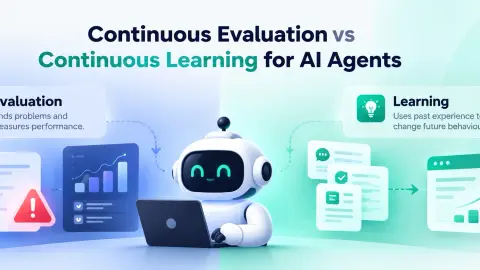
Continuous Evaluation vs Continuous Learning for AI Agents
The article explains the difference between continuous evaluation, which tests agent performance, and continuous learning, which turns past experience into reusable lessons that change future behavior, and describes how the platform Reflexio combines both approaches to help AI agents avoid…
Reflexio Blog5 min read
How to Measure AI Agent Behavior Improvement
A step-by-step guide on measuring AI agent behavior improvement, covering how to establish a baseline, select task-specific metrics such as success rate and retries, compare results before and after changes, and verify whether learning leads to lasting gains without regressions.
Reflexio Blog10 min read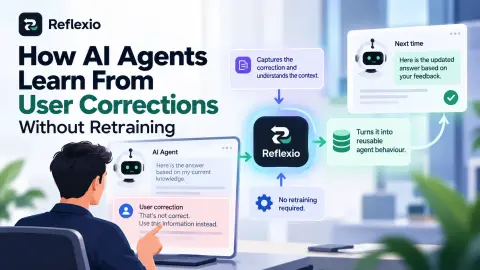
How AI Agents Learn From User Corrections Without Retraining
Learn how AI agents can turn user corrections into evaluated, reusable behavioural guidance without retraining the underlying model.
Reflexio Blog11 min read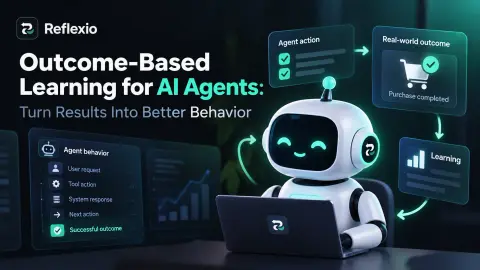
Outcome Based Learning for AI Agents: Turn Results Into Better Behavior
Explore how production outcomes, successful actions and failed paths can provide evidence for improving AI agent behaviour.
Reflexio Blog9 min read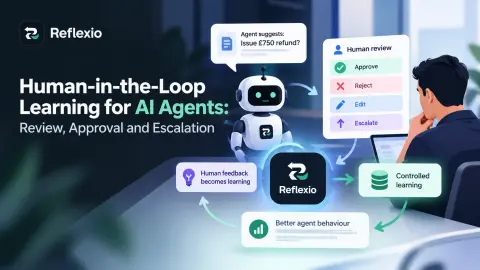
Human-in-the-Loop Learning for AI Agents: Review, Approval and Escalation
Learn when AI agents should act, request approval or escalate, and how human corrections can become reusable, controlled behavioural learning.
Reflexio Blog9 min read
Everyone Is Building Self-Improving Agents. Almost Nobody Means the Same Thing.
A nightly fine-tune and a one-line note appended to a markdown file are both sold as agents that learn from experience. They are the same loop with different parts swapped out.
Reflexio Blog7 min readYour Agent Dreams. It Still Can't Tell You If It Got Better.
Dreaming makes an agent's memory better. Only measurement makes the agent better. Anthropic's Dreams, ChatGPT, Codex, Gemini CLI and OpenClaw all rewrite agent memory offline — and every gate they document checks whether the rewritten memory is tidy, not whether the agent improved.
Reflexio Blog8 min read
How Creao Turned Agent Exploration Into Repeatable Execution
Creao used Reflexio to turn successful agent behavior into reusable guidance—cutting median model calls by 75%, reducing task failures by 36%, and showing positive impact from retrieved learnings in 47% of evaluated cases.
Reflexio Blog6 min read
Your Agent Remembers Everything and Learns Nothing
AI memory and agent self-improvement sit in the same slot, use the same storage, and are sold against the same failure — which is why they get confused. The difference is what has to happen before the system writes anything down. One writes when something is said.
Reflexio Blog7 min read
From Loop Engineering to Self-Improvement: The Loop Over Loops
Loop engineering is how we get agents to iterate toward a goal on their own. Self-improvement is the next stage — a loop wrapped around those loops, so each pass makes the next one better. This is a field note on how the two ideas connect.
Reflexio Blog7 min read
Learn, Generalize, Reflect and Optimize (LGRO): A Practical Guide for Self-Improving AI Agents
Memory remembers what happened. Learning changes what the agent does next time. LGRO — Learn, Generalize, Reflect, Optimize — is a practical framework for non-parametric, self-improving AI agents.
Reflexio Blog8 min read
Details are compiled from Reflexio's website and public sources, last verified Oct 7, 2026. Features and pricing change — confirm on the official site before you buy.
Try Reflexio
Freemium · from $299/month
Tags
- Self-Improving AI
- Agent Learning
- Continuous Learning
- LLM Observability
- User Feedback Loop
Comments
Sign in to join the discussion.